






crochet newborn blanket patterns are easier to choose when you decide what the blanket is for, then check its finished size, yardage, time, and care requirements. A pretty photo is not enough: a pattern can take far longer than expected, use more yarn than its listing suggests, or be unsuitable for the way a family plans to use it.
Key Takeaways
- Newborn blankets come in several sizes. Choose by intended use, not by the word “newborn” alone.
- For a 30 by 35 inch blanket, a simple design may take an estimated 8 to 18 hours, while dense post stitch texture may take 28 to 55 hours.
- Price commissioned work using actual yarn and total labor, and do not use a crocheted blanket as loose bedding in an unattended infant sleep space.
Table of Contents
- Start with the intended use
- Choose a pattern step by step
- Compare estimates and avoid common pitfalls
- Conclusion
- Frequently asked questions
Start with the intended use
There is no single standard newborn blanket size. A small lovey, stroller blanket, receiving blanket, and crib size serve different purposes. Decide whether you want a supervised covering for outings, a small comfort item, a practical receiving blanket, or a decorative gift before comparing crochet newborn blanket patterns. Keep sleep safety separate from pattern choice: a crocheted blanket should not be loose bedding in an unattended infant sleep area.
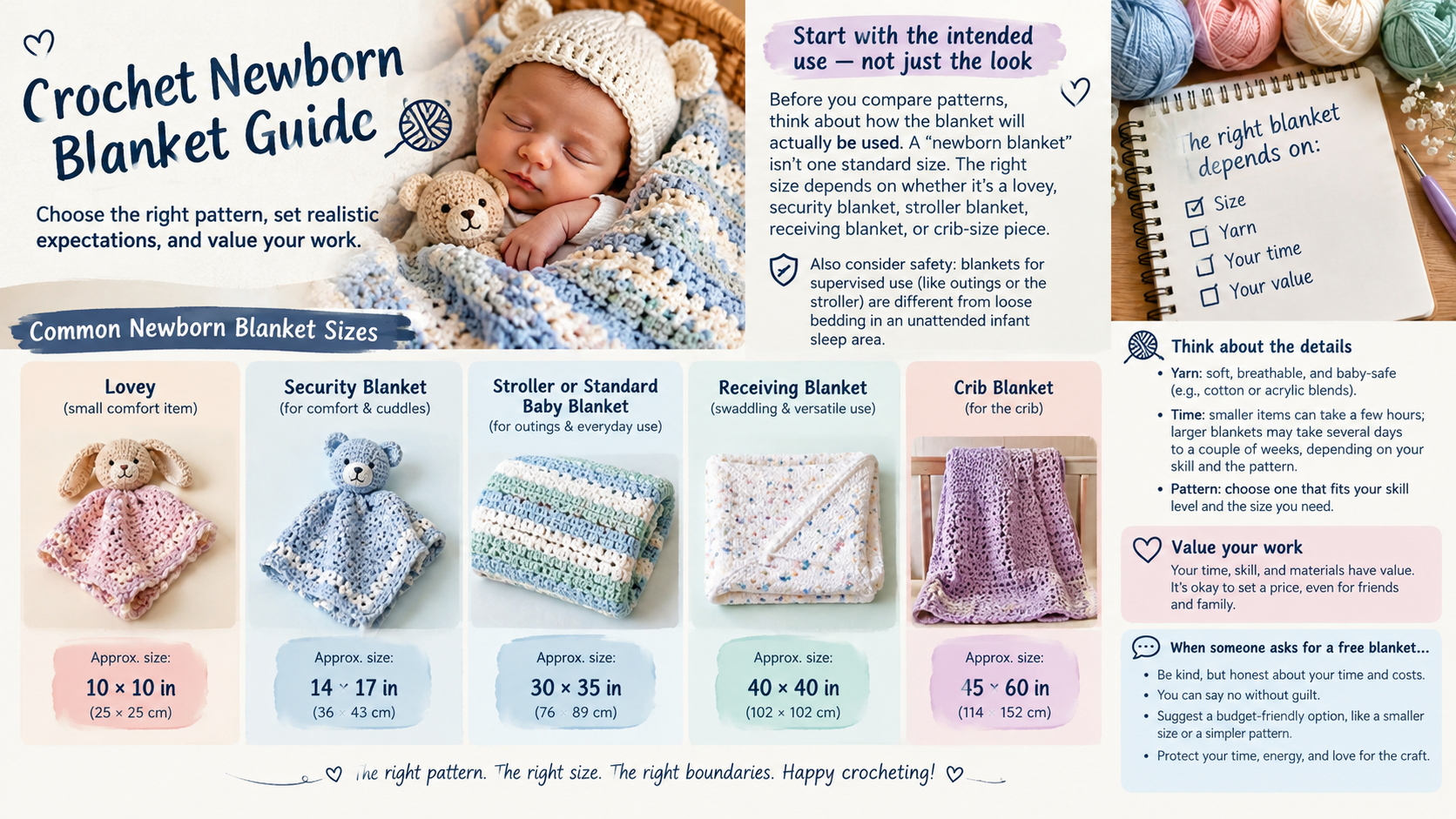
Published dimensions vary by type. Use these as planning references, not rigid standards:
- Lovey: approximately 10 by 10 inches.
- Security blanket: approximately 14 by 17 inches.
- Stroller or standard baby blanket: around 30 by 35 inches.
- Receiving blanket: around 40 by 40 inches.
- Crib blanket: around 45 by 60 inches.
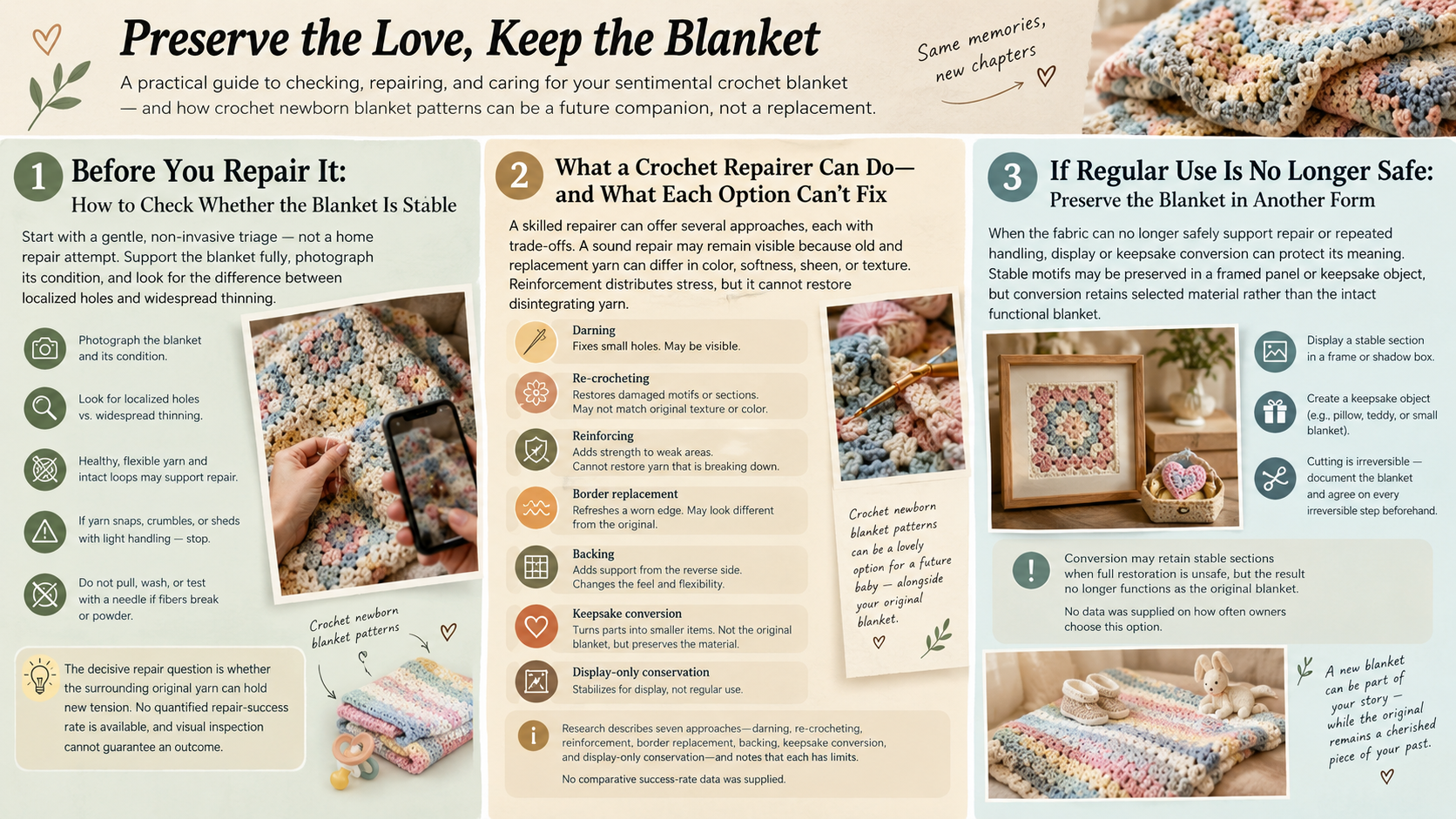
Before you start, ask the recipient what size they expect and how they plan to use it. Some people call a 30 by 35 inch stroller blanket a baby blanket; others expect a receiving blanket closer to 40 inches square. For more guidance on safe supervised use, read Crochet Baby: 5 Safe Ways to Use Blankets.
Choose a pattern step by step
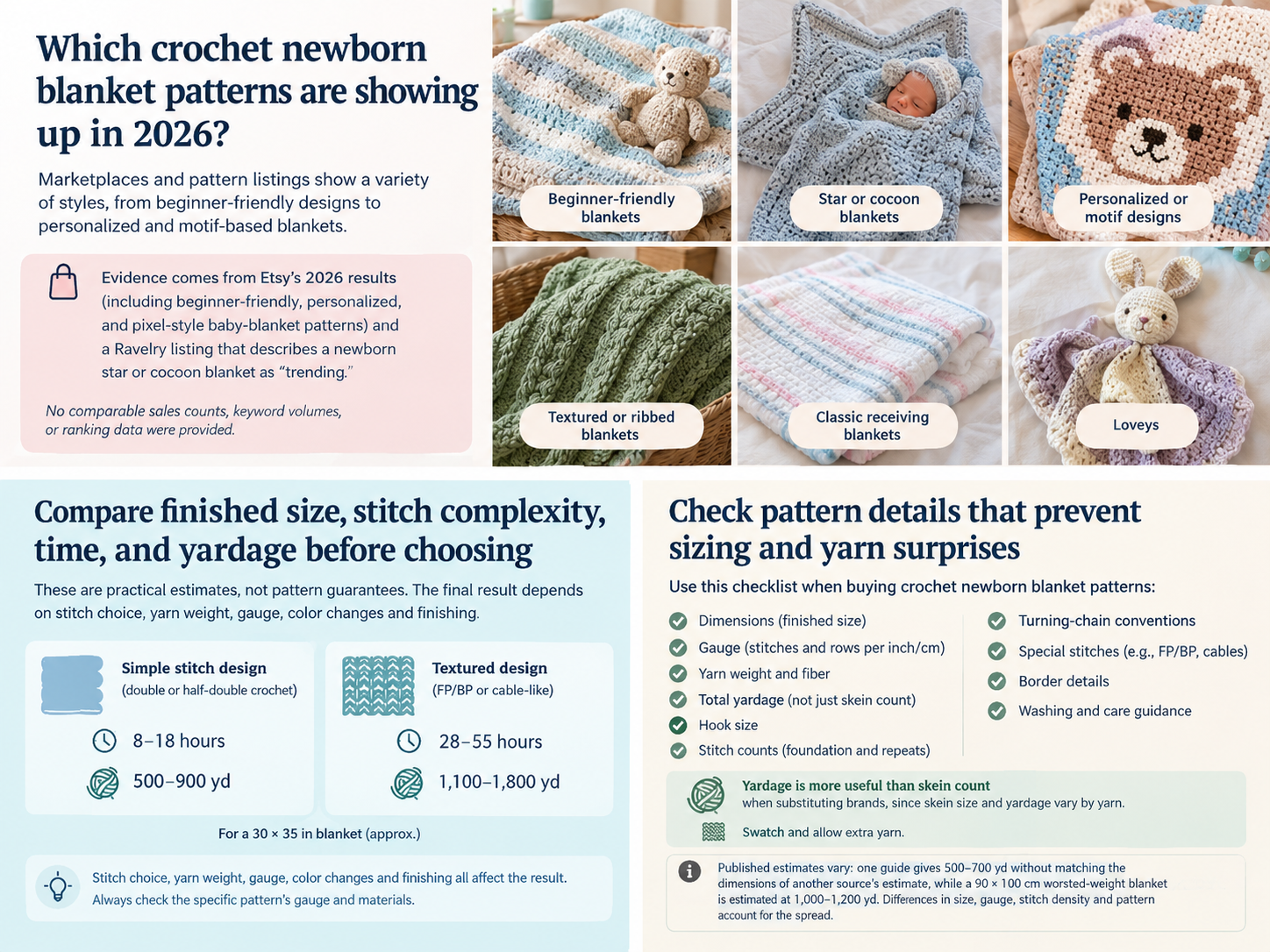
Use a few practical checks to narrow your options before buying yarn. Marketplace listings show a range of styles, including beginner rectangles, personalized motifs, pixel designs, textured blankets, loveys, and star or cocoon shapes. Etsy results and a Ravelry listing described as trending show that these styles have marketplace visibility, but the available evidence does not include comparable sales counts or search rankings. Treat them as options, not a proven popularity order. Browse Etsy baby blanket pattern listings and Ravelry newborn star blanket patterns for examples, then verify each pattern’s details.
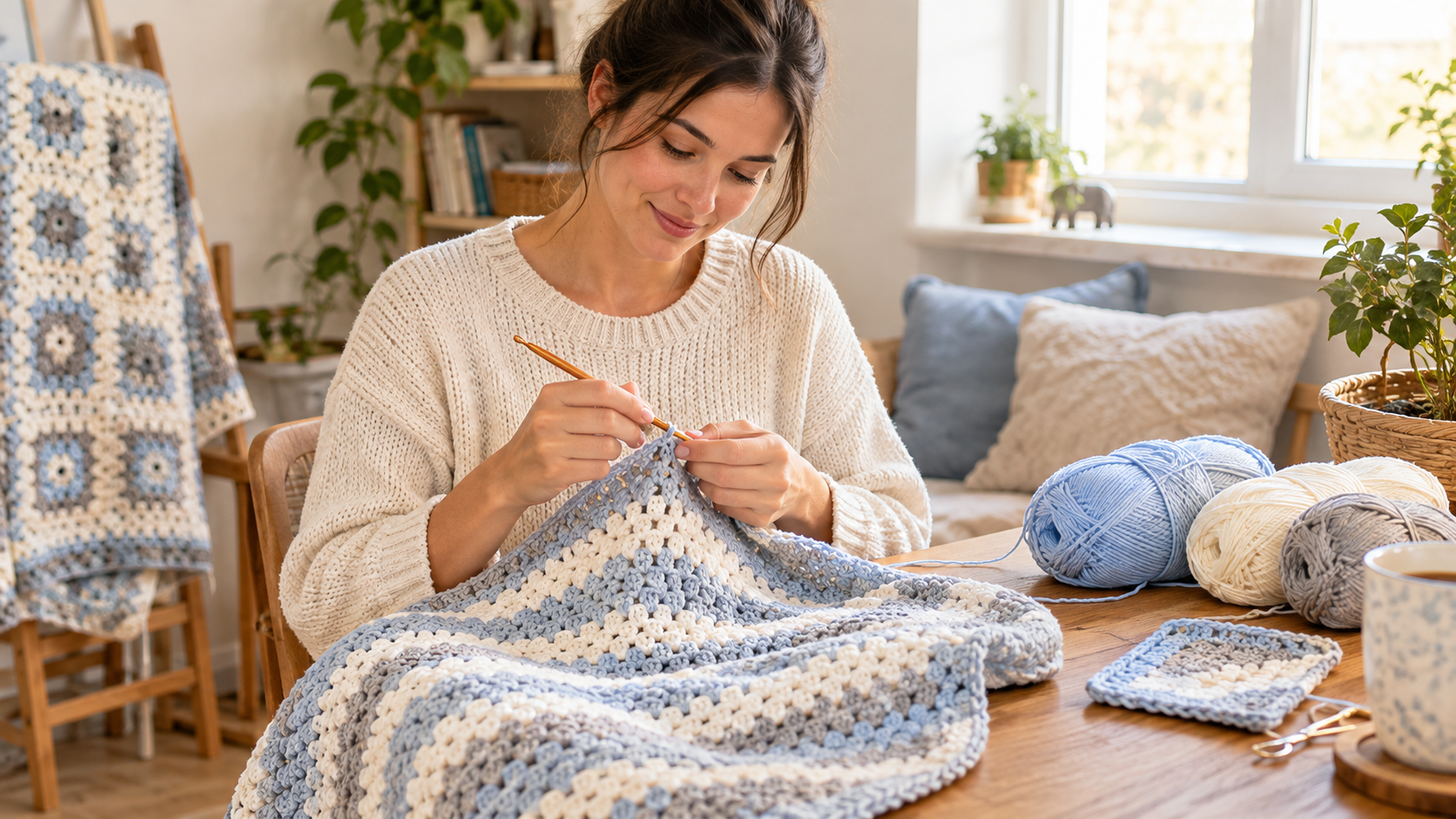
- Match the construction to your skill. A rectangle in single, half double, or double crochet is usually easier to resize and track. A star or cocoon shape has increases and shaping. Motifs and personalization add color changes and ends to weave in.
- Choose a fabric you can use and care for. A dense texture may feel warm and substantial, but can use more yarn and take longer. Check the yarn fiber, wash instructions, shedding, and softness rather than relying on a “baby yarn” label.
- Read the pattern before purchasing supplies. Look for finished dimensions, gauge, yarn weight, total yardage, hook size, stitch counts, turning chain rules, special stitch instructions, border details, and washing guidance.
- Make and measure a swatch. Follow the pattern’s gauge instructions. If the swatch is wider or narrower than stated, your finished blanket and yarn use may change. Recalculate before committing to the full project.
- Estimate total effort, not just crochet time. Include swatching, setup, color changes, weaving in ends, edging, blocking, inspection, and packaging. If you are making it for someone else, include communication and delivery in your plan.
Estimate yardage and time realistically
For a 30 by 35 inch blanket, practical estimates suggest 500 to 900 yards and 8 to 18 hours for a simple double or half double crochet design. A similar size in front post and back post, or cable like texture, may use 1,100 to 1,800 yards and take 28 to 55 hours. These are synthesized estimates, not verified averages or guarantees for a specific pattern.
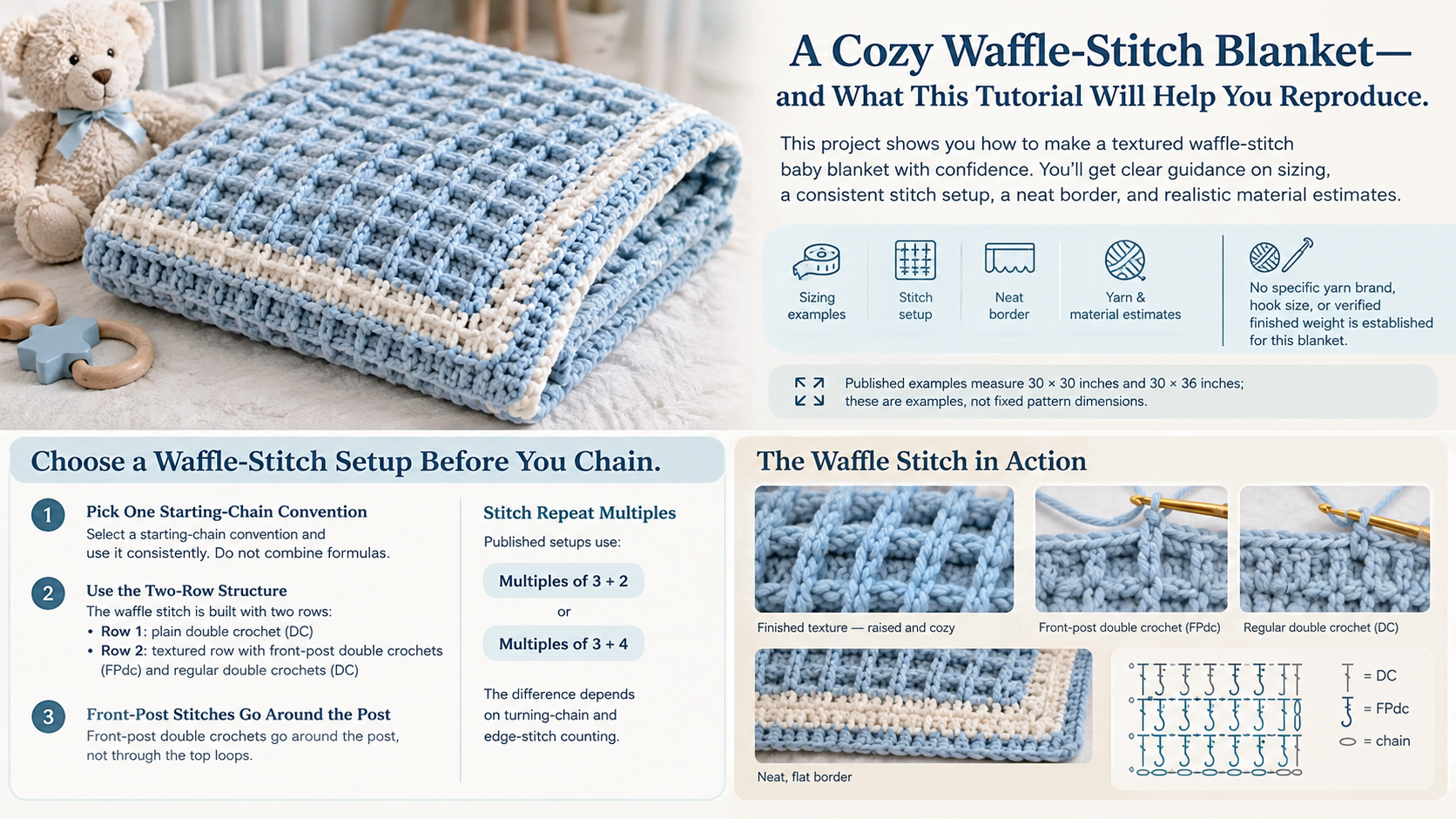
Post stitches take extra movement and checking, and the raised fabric can consume more yarn. Motifs, frequent color changes, a smaller hook, and dense stitches also add time. Bulky yarn and taller stitches may work faster, but they can produce a heavier fabric. Follow the pattern’s gauge and materials, and keep extra yarn on hand.
Compare estimates and avoid common pitfalls
Pattern descriptions often omit the information that matters most once the hook is in your hand. Use the comparison below as a starting point, then rely on the specific pattern and your own swatch. All time and yardage figures are approximate.
| Design type | Typical size | Estimated time | Estimated yardage | What to expect |
|---|---|---|---|---|
| Simple double or half double crochet | 30 by 35 inches | 8 to 18 hours | 500 to 900 yards | Beginner friendly repeats and straightforward resizing |
| Simple single crochet or moss stitch | 30 by 35 inches | 14 to 28 hours | 700 to 1,200 yards | More stitches and a denser fabric |
| Textured post stitch design | 30 by 35 inches | 28 to 55 hours | 1,100 to 1,800 yards | Extra checking, correction time, and yarn use |
| Motif or personalized design | 30 by 35 inches | 25 to 60 hours | 900 to 1,600 yards plus contrast colors | Color changes and finishing can take substantial time |
Do not compare yardage without size and stitch details
Published estimates vary. One general guide gives 500 to 700 yards without matching the dimensions used by another estimate. A 90 by 100 centimeter worsted weight blanket is estimated at 1,000 to 1,200 yards. That difference can reflect size, gauge, stitch density, yarn weight, or border width. Total yards are more useful than skein count when substituting brands because skeins can contain different lengths.
For a pattern buying checklist and more yarn substitution advice, see Yarn: 21 Best Ways to Master Fiber, Gauge, and Cost and Crochet Sweater Patterns: 15 Proven Ways to Avoid Costly Mistakes. The same principles apply: gauge and construction affect the finished size, and pattern clarity matters.
Include labor when you quote a commission
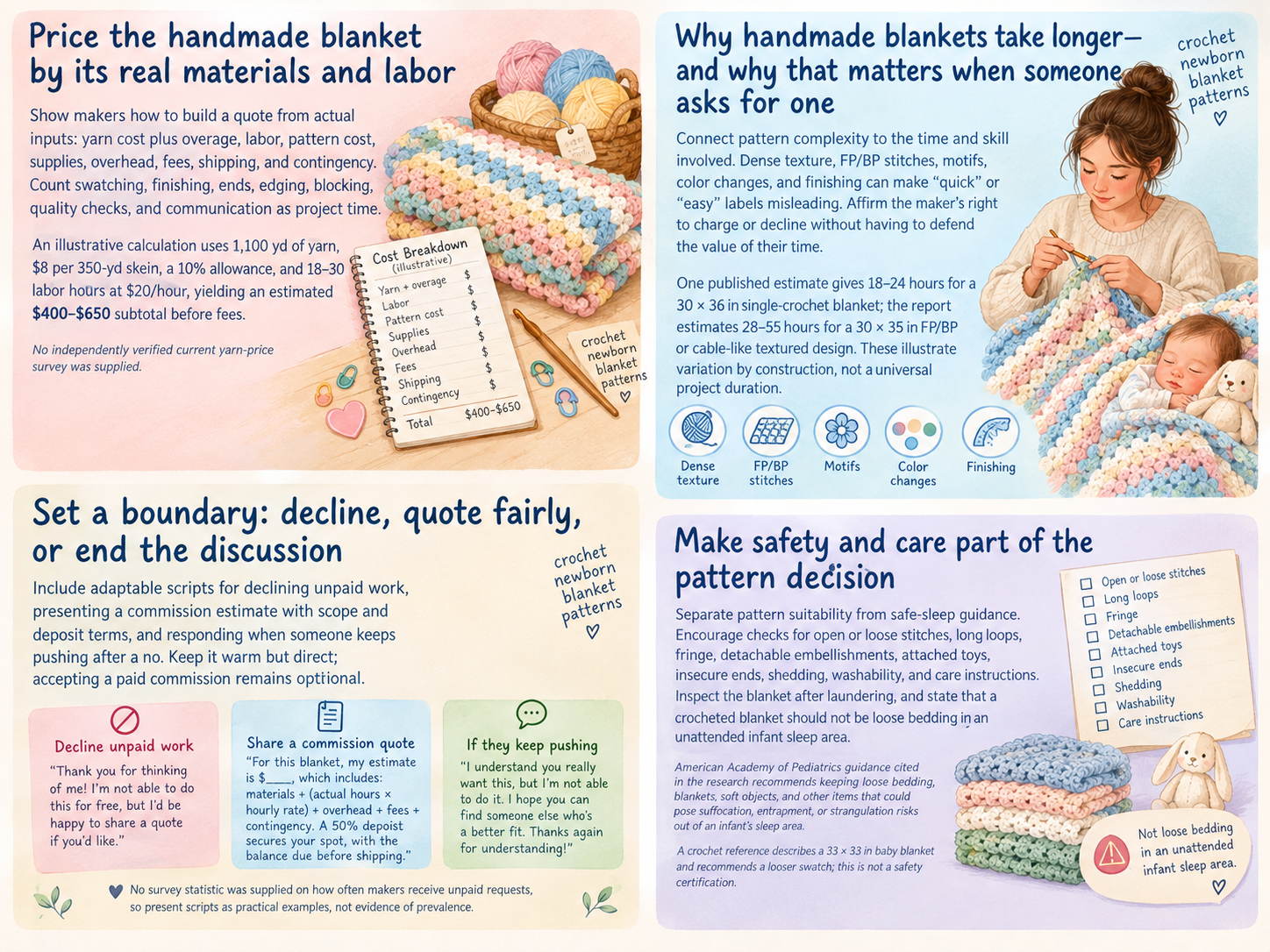
Do not quote a handmade blanket using yarn cost alone. A practical quote is materials plus actual hours multiplied by your hourly rate, then overhead, fees, shipping, and contingency. Count swatching, crocheting, color changes, ends, edging, blocking, quality checks, and client communication.
For an illustrative example, assume 1,100 yards of yarn, a price of $8 for each 350 yard skein, a 10 percent allowance, and 18 to 30 hours of labor at $20 an hour. That produces an estimated subtotal of about $400 to $650 before fees. These are example assumptions, not verified current yarn prices or a market rate. Replace them with your receipts, pattern, and timed estimate. For more boundary setting ideas, see Crochet Baby: 5 Powerful Ways to Set Gift Boundaries.
If you are asked to make a blanket for free, you can decline without explaining every hour. Try: “Thank you for thinking of me. I cannot make this for free, but I can send a paid commission estimate if you are interested.” If you want to accept the work, specify size, materials, estimated completion date, deposit, shipping, and what the price includes. If the person keeps pushing, say: “I have already said no to making this without payment. My decision is final, so please do not ask again.”
Keep safety and care in the pattern decision
The American Academy of Pediatrics advises keeping loose blankets, soft objects, and other items that could pose suffocation, entrapment, or strangulation risks out of an infant sleep area. A crocheted blanket is not loose bedding for an unattended baby. Follow current AAP safe sleep guidance.
Inspect a pattern for open stitches, long loops, fringe, cords, buttons, beads, detachable appliqués, attached toys, and insecure ends. Choose washable yarn that suits the family’s care needs. After laundering, check for stretched openings, shedding, loose ends, unraveling joins, or detached parts. A stable swatch or attractive design is not a safety certification.
Conclusion
Choose the intended use and finished size first. Then check gauge, yardage, stitch complexity, finishing time, washability, and safety before you begin. A clear quote should include materials and every hour of labor, and you are allowed to decline unpaid work.
Compare crochet newborn blanket patterns using the checklist above, make a swatch, and write down your actual time and yarn use before committing to a project or commission. Choose one pattern that fits your skills and the family’s intended supervised use, then start with the swatch.
Frequently asked questions
What size should a newborn crochet blanket be?
It depends on the intended use. Published examples range from a 10 by 10 inch lovey to a 40 by 40 inch receiving blanket. Confirm the recipient’s expected size because “newborn blanket” is not one standard dimension.
How much yarn do I need for a newborn blanket?
It depends on size, yarn weight, gauge, stitch density, and border. A 30 by 35 inch simple double crochet design may use an estimated 500 to 900 yards, while dense post stitch texture may use 1,100 to 1,800 yards. Use the pattern’s total yardage and buy a small allowance.
How long does it take to crochet a newborn blanket?
A 30 by 35 inch simple double or half double crochet blanket is estimated at 8 to 18 hours. A textured front post and back post design of similar size may take 28 to 55 hours. Your speed and finishing work change the total.
Can a crocheted blanket go in a newborn crib?
No. Do not use a crocheted blanket as loose bedding in an unattended infant sleep area. Follow current safe sleep guidance and keep loose blankets and soft objects out of the sleep space.
How do I respond to a request for a free handmade blanket?
Be warm and direct: “Thank you for asking, but I cannot make this for free. I can provide a paid estimate if you would like.” You can also decline without offering a commission.
{"@context":"https://schema.org","@type":"FAQPage","mainEntity":[{"@type":"Question","name":"What size should a newborn crochet blanket be?","acceptedAnswer":{"@type":"Answer","text":"It depends on the intended use. Published examples range from a 10 by 10 inch lovey to a 40 by 40 inch receiving blanket. Confirm the recipient’s expected size because newborn blanket is not one standard dimension."}},{"@type":"Question","name":"How much yarn do I need for a newborn blanket?","acceptedAnswer":{"@type":"Answer","text":"It depends on size, yarn weight, gauge, stitch density, and border. A 30 by 35 inch simple double crochet design may use an estimated 500 to 900 yards, while dense post stitch texture may use 1,100 to 1,800 yards. Use the pattern’s total yardage and buy a small allowance."}},{"@type":"Question","name":"How long does it take to crochet a newborn blanket?","acceptedAnswer":{"@type":"Answer","text":"A 30 by 35 inch simple double or half double crochet blanket is estimated at 8 to 18 hours. A textured front post and back post design of similar size may take 28 to 55 hours. Your speed and finishing work change the total."}},{"@type":"Question","name":"Can a crocheted blanket go in a newborn crib?","acceptedAnswer":{"@type":"Answer","text":"No. Do not use a crocheted blanket as loose bedding in an unattended infant sleep area. Follow current safe sleep guidance and keep loose blankets and soft objects out of the sleep space."}},{"@type":"Question","name":"How do I respond to a request for a free handmade blanket?","acceptedAnswer":{"@type":"Answer","text":"Be warm and direct: Thank you for asking, but I cannot make this for free. I can provide a paid estimate if you would like. You can also decline without offering a commission."}}]}
Leave a Reply