





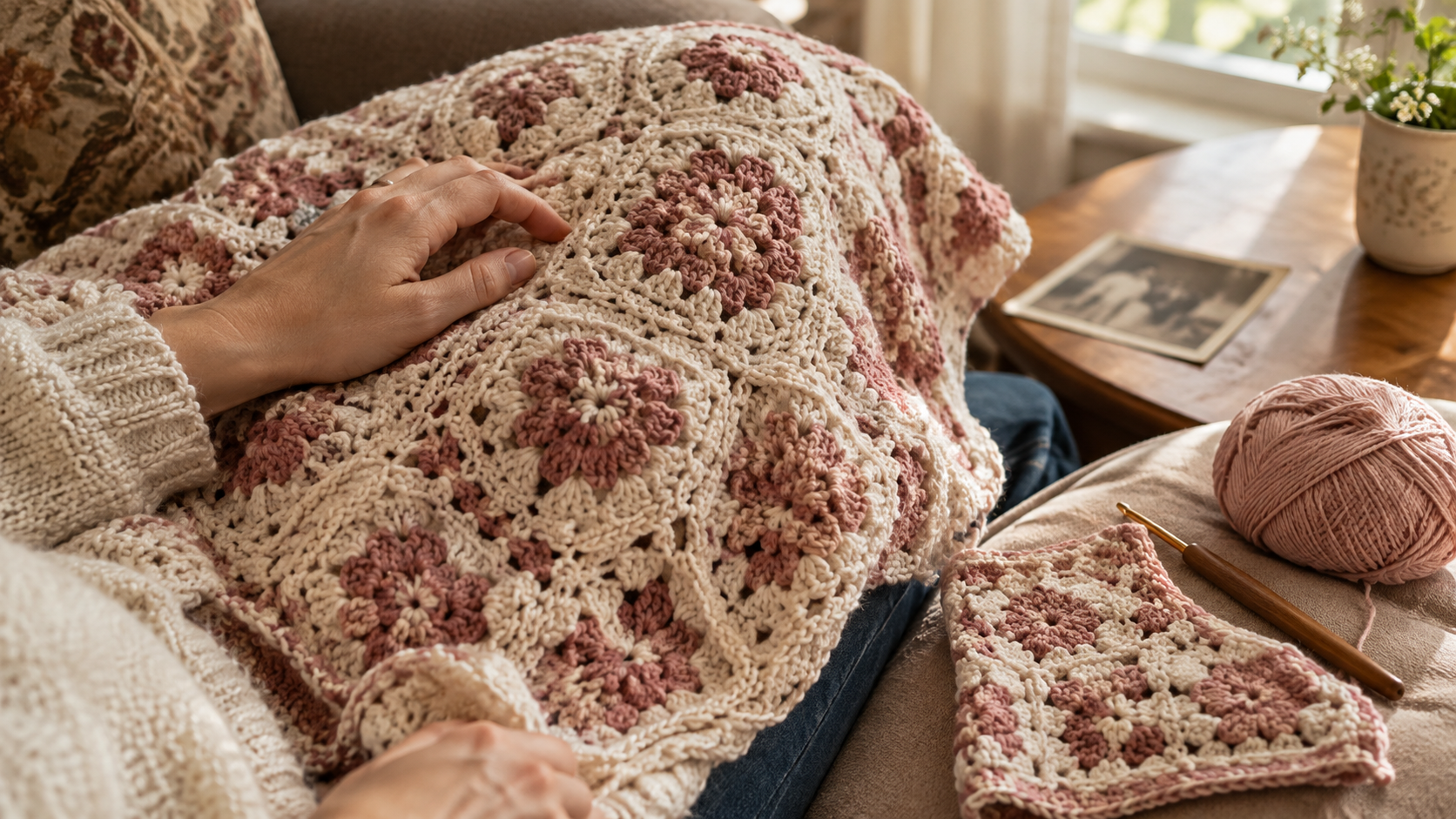


Crochet baby blankets can look unexpectedly raised after granny squares are joined, especially when slip stitches pull the edges together. A neat ridge may be intentional, but waves, cupped squares, or corners that will not meet are signs to investigate before you block or undo the seam.
This guide helps you tell the difference, test a safer fix, and decide whether the join needs to be changed. The goal is a blanket that lies flat without stretching, stays flexible, and is used with appropriate baby safety precautions.
Key Takeaways
- A consistent, low ridge can be a design feature. Irregular waves, cupping, and displaced corners suggest distortion.
- Test tension and edge alignment before undoing every seam. A joining hook 0.5 to 1 mm larger can help if slip stitches are contracting the edges.
- Blocking can relax mild differences, but it cannot reliably fix badly mismatched squares or a severely tight seam. Keep loose blankets out of an infant’s sleep space.
Why granny square joins become raised
The most common reason for crochet granny square blanket joining puckering is tight slip stitch tension. Slip stitches have little height and limited stretch. If you pull each stitch snug, the seam contracts the two edges and draws the fabric upward, creating a narrow ridge or a waffle like surface.

Tension is not the only possible cause. Unequal square dimensions or stitch counts force one edge to be eased into another. Missing an edge stitch, working into different loops on the two motifs, or crowding a corner can make the ridge uneven. A different yarn, hook, gauge, or washing history can also make neighboring squares behave differently.
Check the squares before changing your hook. Lay them in their intended orientation and measure matching sides. Compare the number of places available to join, not just the finished dimensions. A larger hook may loosen a contracted seam, but it will not correct unequal edges or missing stitches.
If you are still choosing materials, the yarn fiber, gauge, and cost guide explains why yarn construction and fiber can affect the finished fabric. For more general planning, see this crochet baby blanket guide.
Check texture or distortion
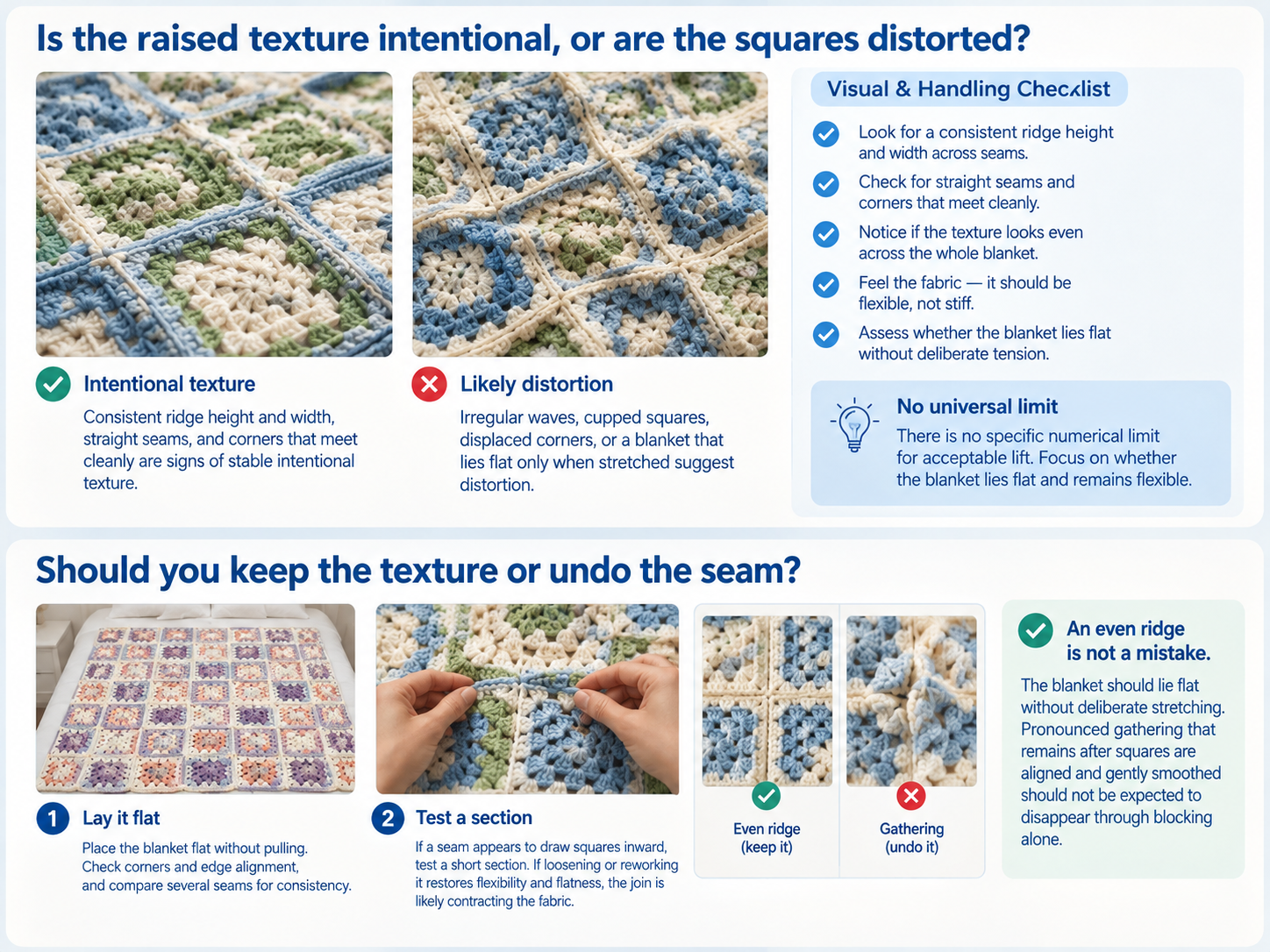
Do not judge a seam only by whether it stands above the fabric. Some joining styles are meant to create a visible ridge. Compare several joins and ask whether the texture is regular. Similar height and width from seam to seam, straight edges, and corners that meet cleanly usually point to intentional relief rather than a construction problem.
- Likely stable texture: the blanket lies flat without pulling, corners remain square, seams look consistent, and the fabric still bends easily.
- Likely distortion: the squares cup toward the join, sharp waves form, corners shift, one side looks shorter, or the blanket lies flat only when stretched.
There is no universal measurement for acceptable seam lift. Look at how the whole fabric behaves. Lay it on a flat surface without tugging, smooth it gently with your hands, and lift it by two adjacent corners. A low, even ridge can be perfectly sound. Localized gathering or folds that pull across a square deserve attention.
A useful distinction is whether the ridge follows a deliberate pattern or bunches unpredictably. A textured join should repeat. If one part is raised and another sinks, inspect stitch placement and tension along that section.
Step by step: test and adjust the seam
Work through these checks before unpicking a large area. Test one short section first. If releasing it restores flatness and flexibility, you have evidence that the join is pulling the fabric together.
- Lay the blanket flat. Do not stretch it into shape. Note which seams ripple, where the corners land, and whether the squares pull inward.
- Compare edge lengths and counts. Measure the corresponding edges and count the stitches or spaces available along each one. Align the corners and midpoints. Do not force unequal edges together to make them appear even.
- Check your joining placement. Make sure each joining stitch catches corresponding positions on both squares. Use the same loop placement consistently, such as the chosen outer loops on both motifs.
- Undo a short section if needed. Rejoin loosely, letting the slip stitch rest against the edge instead of cinching the yarn after every stitch. Keep the seam flexible when you bend the fabric.
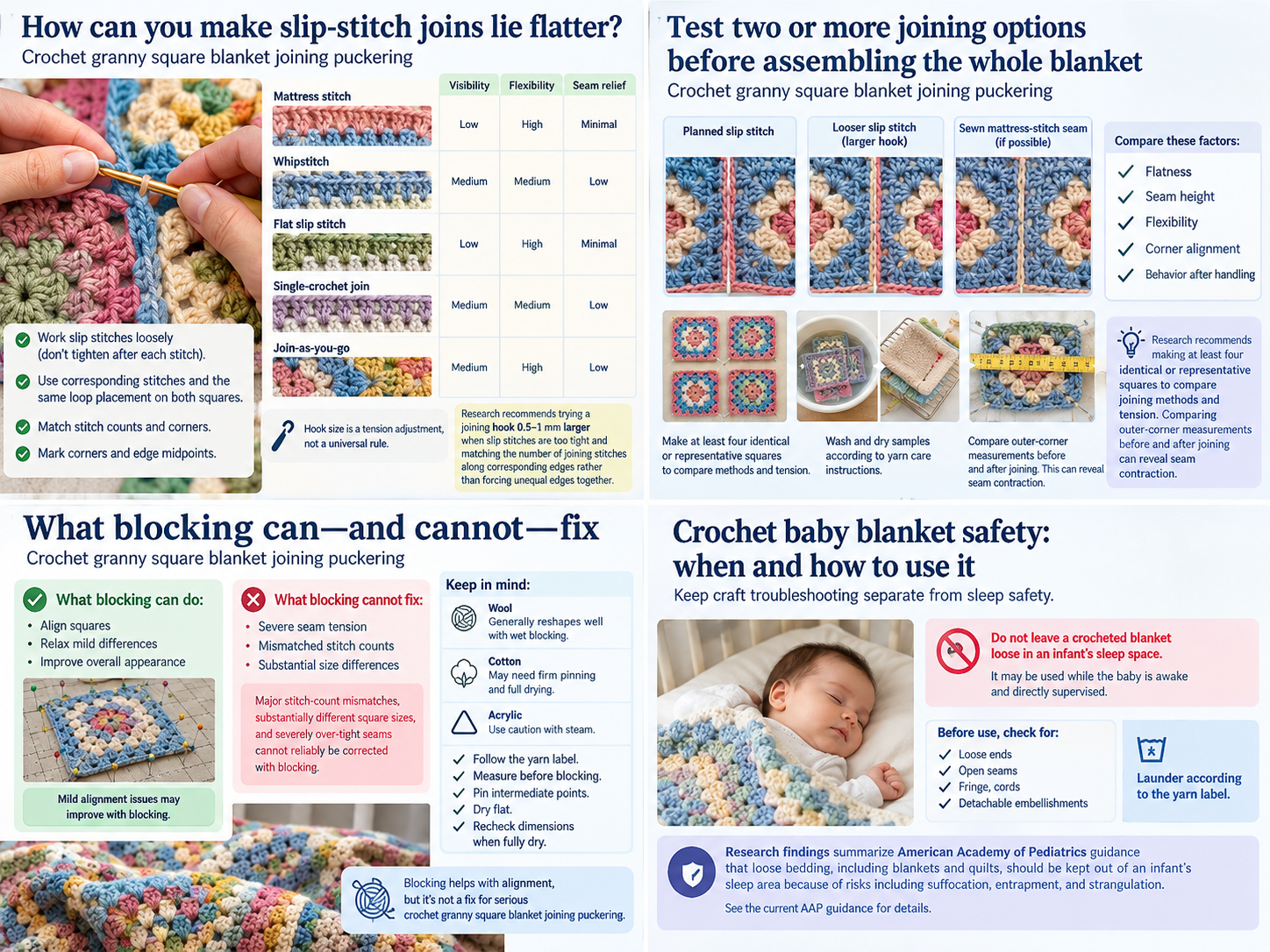
- Try a larger hook if the seam contracts. Test a hook 0.5 to 1 mm larger than the one used for the squares. This is a tension adjustment, not a universal rule. If the seam becomes gappy, use a smaller hook or adjust your hand tension.
- Compare methods before committing. Mattress stitch is usually discreet and flexible. Whipstitch is simple but can show a diagonal line. Flat slip stitch gives a defined ridge. A single crochet join is sturdier and more prominent. Join as you go can simplify assembly but still requires consistent counts and placement.
For a low risk comparison, make at least four representative squares in the actual yarn. Join one pair with your planned slip stitch and original hook, then join another pair with the same method and a hook 0.5 to 1 mm larger. If possible, sew a third pair with mattress stitch. Wash and dry the samples according to the yarn label, then compare their flatness, seam height, flexibility, corner alignment, and behavior after handling.
Measure the distance between the outside corners before and after joining. If the joined sample becomes noticeably shorter across the seam, that is a practical sign of contraction. A sample test is especially useful before assembling an entire newborn blanket or committing to a decorative join.
Common pitfalls, blocking, and baby safety
Blocking is finishing, not seam repair
Blocking may improve mild differences and help squares line up, but it cannot reliably repair a major stitch count mismatch, substantially different square sizes, or a severely over tight seam. If pronounced gathering remains after you align and gently smooth the squares, do not expect blocking alone to erase it. Correct the construction first when possible.
Fiber matters. Wool generally reshapes well with wet blocking and should remain pinned until fully dry. Cotton may need firm pinning and complete drying. Acrylic can be permanently flattened or relaxed by excessive steam, so use caution and follow the yarn label. For more on fiber selection and care, read the guide to yarn and fiber choices.
Measure width and length before blocking, and check the diagonals if the blanket looks skewed. Pin corners and intermediate points rather than pulling only at the corners. Keep the blanket supported flat while it dries, and recheck the dimensions once it is completely dry. Do not wring it or hang a wet blanket where its weight can stretch it.
| What you see | Likely cause | Practical next step |
|---|---|---|
| Even ridge on every seam | Intentional or stable raised join | Check that it lies flat and stays flexible |
| Sharp waves or cupped squares | Tight tension or mismatched edges | Check counts, alignment, and a short rejoin |
| One seam differs from the rest | Changed placement, direction, or tension | Compare loop placement and work orientation |
| Ripple returns after blocking | Structural seam tension or edge mismatch | Correct the join instead of stretching the blanket |
Use a crochet baby blanket with sleep safety in mind
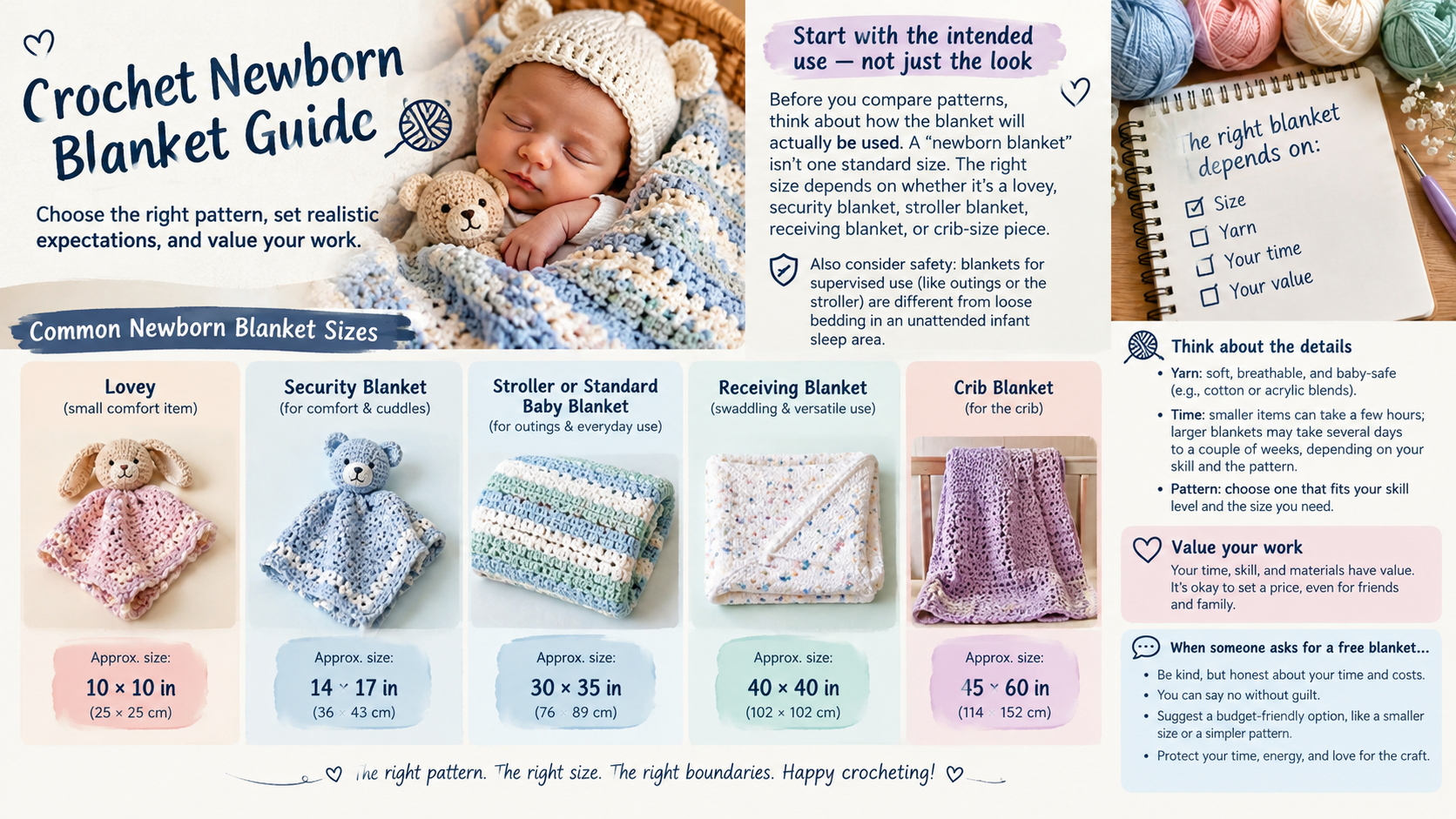
Seam quality and infant sleep safety are separate questions. The American Academy of Pediatrics advises keeping loose bedding, including blankets and quilts, out of an infant’s sleep area because of risks that include suffocation, entrapment, and strangulation. Do not place a crocheted blanket loose in a crib, bassinet, or other infant sleep space. See the AAP recommendations on sleep related infant deaths and its parent guide to safe sleep.
A blanket may be used during awake time with an adult directly supervising. Keep it away from the baby’s face and neck, and avoid long fringe, ribbons, cords, detachable decorations, beads, or buttons. Weave in loose yarn ends. Inspect the seams and edges before use and again after washing; repair any opening or unraveling section. A dense stitch, natural fiber, or raised texture does not make a blanket safe for unattended infant sleep.
For additional practical checks, consult the site’s crochet baby blanket safety guide and its advice on preparing a baby blanket for donation.
Conclusion
A raised granny square seam is not automatically a mistake. If the ridge is even, the corners align, and the blanket lies flat without tension, it may be the finish you intended. If the squares cup, the seams wave, or the fabric tightens, inspect counts and placement, then test a short loose rejoin before undoing more.
Block gently and according to the yarn label, but do not use stretching to disguise a contracting seam. For your crochet baby blanket, make a small sample, check the construction, and keep the finished blanket out of an infant’s unattended sleep space. Try one test seam today and compare it before deciding what to change.
Frequently asked questions
Why does my granny square blanket look like a waffle?
Tight slip stitches are a common cause because they contract the edges and lift the fabric. Unequal square sizes, mismatched stitch counts, inconsistent loop placement, or a deliberately raised join can also create this look. Compare several seams and check whether the blanket lies flat without stretching.
Should I undo a raised slip stitch seam?
Not necessarily. A regular ridge with straight seams, aligned corners, and flexible fabric can be an intentional texture. Undo a short section if the edges are drawn together, the squares cup, or the seam forms sharp waves. Rejoin it loosely and see whether the fabric relaxes.
Will blocking fix puckering between granny squares?
Blocking can help with mild alignment differences, but it cannot reliably fix a severely tight seam, major stitch count mismatch, or substantially different square sizes. Correct the source of pronounced gathering rather than stretching the blanket into shape.
What size hook should I use to join granny squares?
There is no single correct size. If slip stitches are pulling the edges together, test a hook 0.5 to 1 mm larger than the square hook and work without tightening each stitch. If the seam is loose or gappy, adjust down slightly while preserving flexibility.
Can a crocheted baby blanket go in a crib?
No. Keep loose blankets and other soft bedding out of an infant’s sleep area. A crocheted blanket can be used while the baby is awake and directly supervised, with loose ends and detachable or wrapping decorations removed or avoided.
{"@context":"https://schema.org","@type":"FAQPage","mainEntity":[{"@type":"Question","name":"Why does my granny square blanket look like a waffle?","acceptedAnswer":{"@type":"Answer","text":"Tight slip stitches are a common cause because they contract the edges and lift the fabric. Unequal square sizes, mismatched stitch counts, inconsistent loop placement, or a deliberately raised join can also create this look. Compare several seams and check whether the blanket lies flat without stretching."}},{"@type":"Question","name":"Should I undo a raised slip stitch seam?","acceptedAnswer":{"@type":"Answer","text":"Not necessarily. A regular ridge with straight seams, aligned corners, and flexible fabric can be an intentional texture. Undo a short section if the edges are drawn together, the squares cup, or the seam forms sharp waves. Rejoin it loosely and see whether the fabric relaxes."}},{"@type":"Question","name":"Will blocking fix puckering between granny squares?","acceptedAnswer":{"@type":"Answer","text":"Blocking can help with mild alignment differences, but it cannot reliably fix a severely tight seam, major stitch count mismatch, or substantially different square sizes. Correct the source of pronounced gathering rather than stretching the blanket into shape."}},{"@type":"Question","name":"What size hook should I use to join granny squares?","acceptedAnswer":{"@type":"Answer","text":"There is no single correct size. If slip stitches are pulling the edges together, test a hook 0.5 to 1 mm larger than the square hook and work without tightening each stitch. If the seam is loose or gappy, adjust down slightly while preserving flexibility."}},{"@type":"Question","name":"Can a crocheted baby blanket go in a crib?","acceptedAnswer":{"@type":"Answer","text":"No. Keep loose blankets and other soft bedding out of an infant’s sleep area. A crocheted blanket can be used while the baby is awake and directly supervised, with loose ends and detachable or wrapping decorations removed or avoided."}}]}
Leave a Reply