



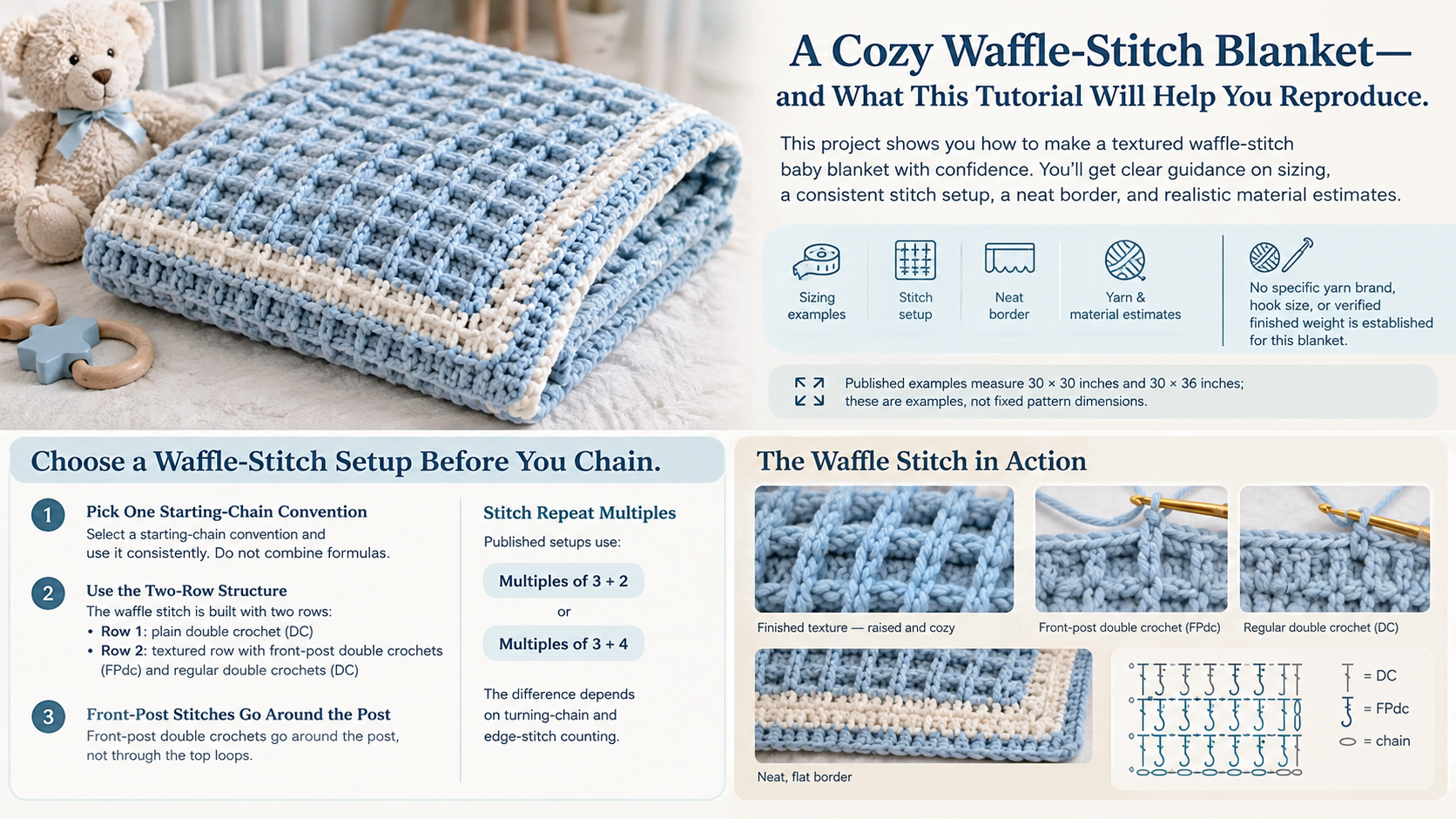

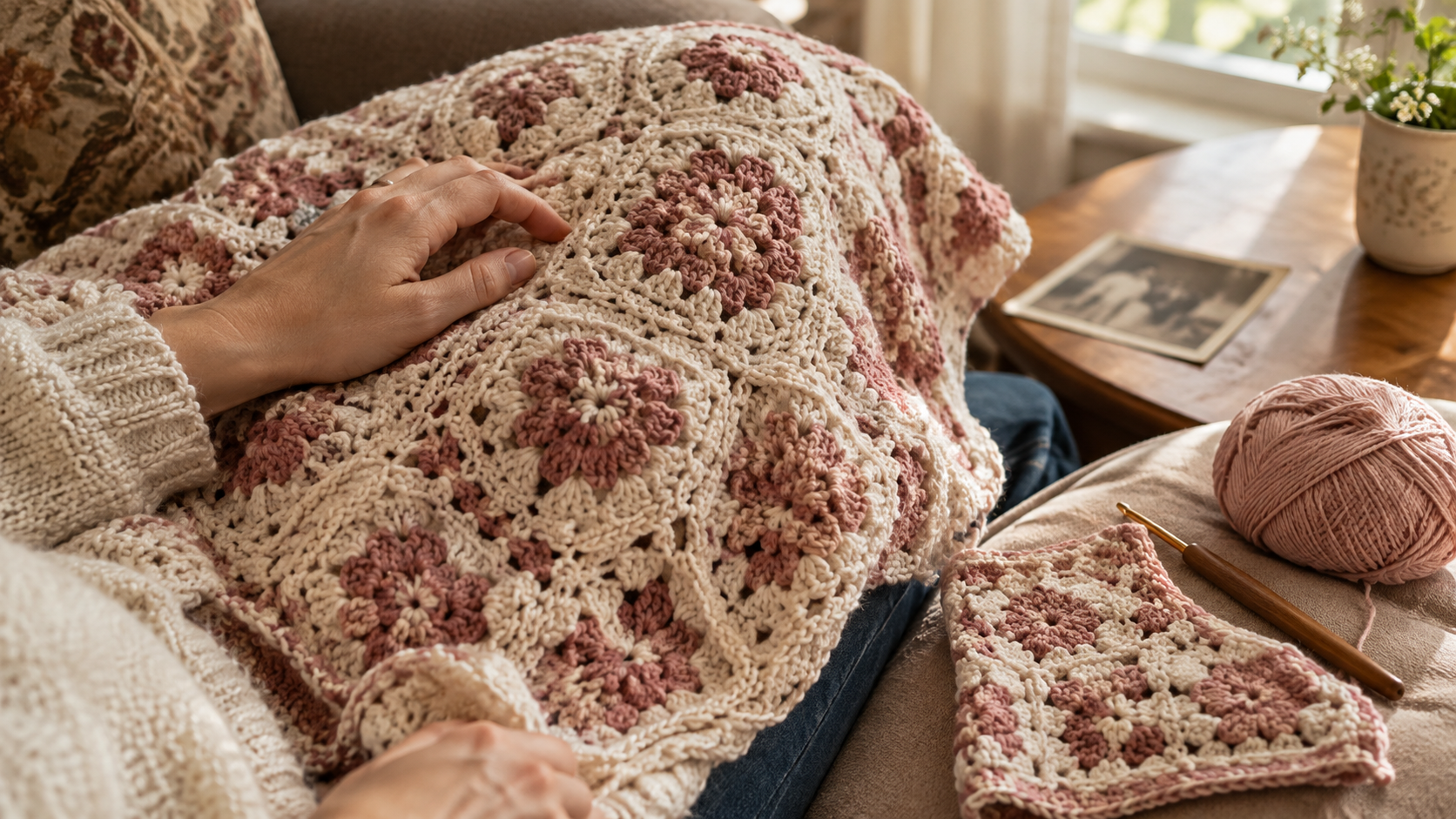


Crochet baby blankets can be beautiful heirlooms, but an attractive stitch pattern does not make a loose blanket suitable for every situation. Before using an openwork design, separate infant sleep from supervised awake time, then check the fabric for stretching, snags, loose yarn, and other practical problems.
Key Takeaways
- Keep loose blankets, including crochet blankets, out of an infant’s sleep space. A sleep sack or properly fitted sleepwear is a safer choice.
- There is no validated safe crochet opening size or stitch pattern. Digit snagging is plausible, but its frequency has not been established.
- For awake use, supervise continuously, keep the blanket away from the face, and inspect its openings, joins, ends, and decorations before use.
Why an open stitch catches the eye
An open crochet baby blanket has a light, airy look that can show off shells, chain spaces, lace, or mesh. That appearance alone cannot tell you whether the blanket is suitable for a particular use. Ask first where it will be used: an infant sleep space, supervised awake time, or transport equipment such as a stroller or car seat. Those are three different contexts with different practical concerns.
The key distinction is that an item may be used during a closely supervised awake activity and still be inappropriate as loose bedding. Construction can affect stretch, snagging, weight, and durability, but it cannot turn a loose blanket into an approved infant sleep product. This guide separates official advice from plausible hazards that lack crochet specific measurements.
What official safe sleep guidance says
The American Academy of Pediatrics, the CDC, Health Canada, and Australian product safety guidance advise keeping loose blankets and soft items out of an infant’s sleep space. The advice does not provide an exception for handmade blankets, lightweight yarn, openwork stitches, or an adult being in the room. A crochet blanket is still loose bedding.
The AAP treats loose bedding as a risk throughout the first year. Health Canada says babies do not need blankets and may move one over the head, creating risks of overheating or suffocation. Use a firm, flat sleep surface with a fitted sheet, and choose properly fitted clothing or an appropriately sized, non weighted sleep sack instead. Review current guidance from the American Academy of Pediatrics, the CDC, and Health Canada.
Sleep, awake time, and travel are not the same
For a sleeping infant, do not leave a crochet blanket loose in a crib, bassinet, or other sleep space. Rolling over does not create a crochet specific exception. AAP guidance addresses loose bedding throughout the first year, approximately the first 12 months; it does not identify a stitch based transition point. After 12 months, the risk profile changes, but size, warmth, damage, and entanglement still matter.
During an awake activity, a caregiver may use a blanket while watching continuously and keeping it away from the baby’s face, neck, fingers, toes, and mouth. Remove it as soon as supervision ends or the baby becomes sleepy. In a stroller, carrier, bouncer, or car seat, follow the product instructions. Never cover the face, obstruct airflow, put a blanket between the child and harness, or let fabric trail near wheels or straps. Australian baby sleep safety guidance also advises removing loose items from sleep spaces.
A practical checklist before supervised awake use
Use these steps before each awake session. They are precautions for supervised use, not permission to use a loose blanket for infant sleep.
- Check the baby and setting. Make sure the baby is awake, an adult can keep continuous watch, and the blanket will not trail from a stroller, crib, playpen, or carrier.
- Keep the fabric low. Place it below the chest and away from the face and neck. Do not wrap it around the body or tuck it in as bedding.
- Inspect the whole blanket. Look for stretched holes, broken strands, unraveling joins, loose tails, and detached decorations. Check both sides, edges, and corners.
- Watch for snags. Remove the blanket if a digit enters an opening, yarn wraps around a limb, loose strands approach the mouth, or the fabric shifts toward the face.
- Stop if the baby is uncomfortable. Remove it if the baby becomes hot, sweaty, flushed, unusually sleepy, or unsettled.
If a digit becomes trapped, carefully free the textile without pulling hard on the body part. Persistent discoloration, swelling, pain, bleeding, or reduced movement after entrapment needs urgent medical assessment.
How stitch, yarn, hook, and finishing affect the fabric
Dense stitches generally create fewer and smaller openings than mesh, lace, filet, or large shell patterns. But appearance is not a safety test. A chain space can stretch when pulled, and openings around joins or increases can be larger than the rest of the fabric. Assess the finished blanket after washing and gentle stretching, not only as it looks on the hook.
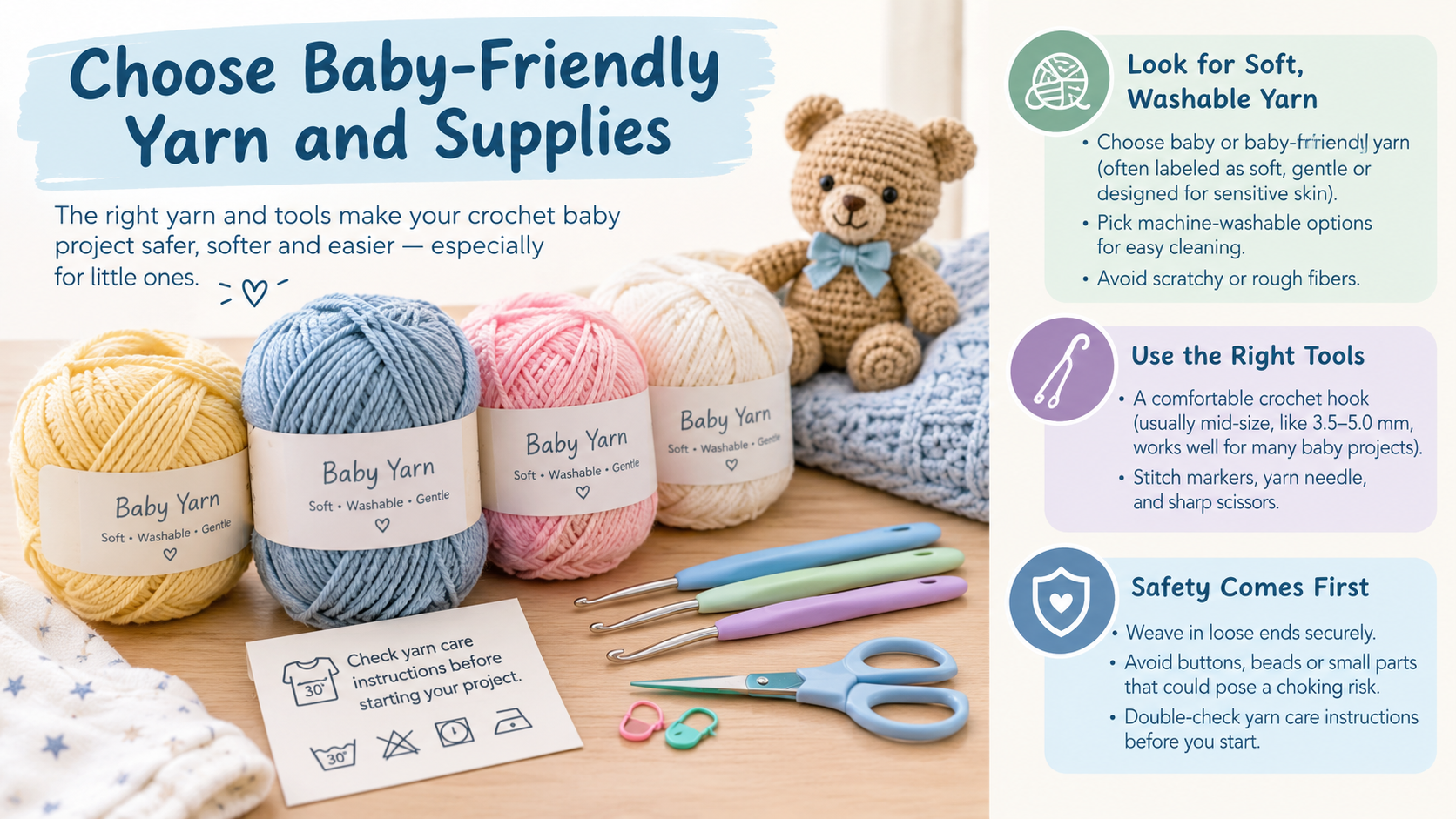
Hook size and tension affect gauge, drape, loop size, and weight. A large hook relative to the yarn may create looser loops; a smaller hook can make a denser, stiffer fabric. Neither choice certifies an infant blanket. A fiber label is not a safety guarantee either. Smooth, tightly spun yarn is less likely to shed than fuzzy or loosely plied novelty yarn, while different fibers vary in heat retention, stretch, and wash behavior. For help comparing fibers and labels, see what is yarn and the guide to patterns and yarn selection.
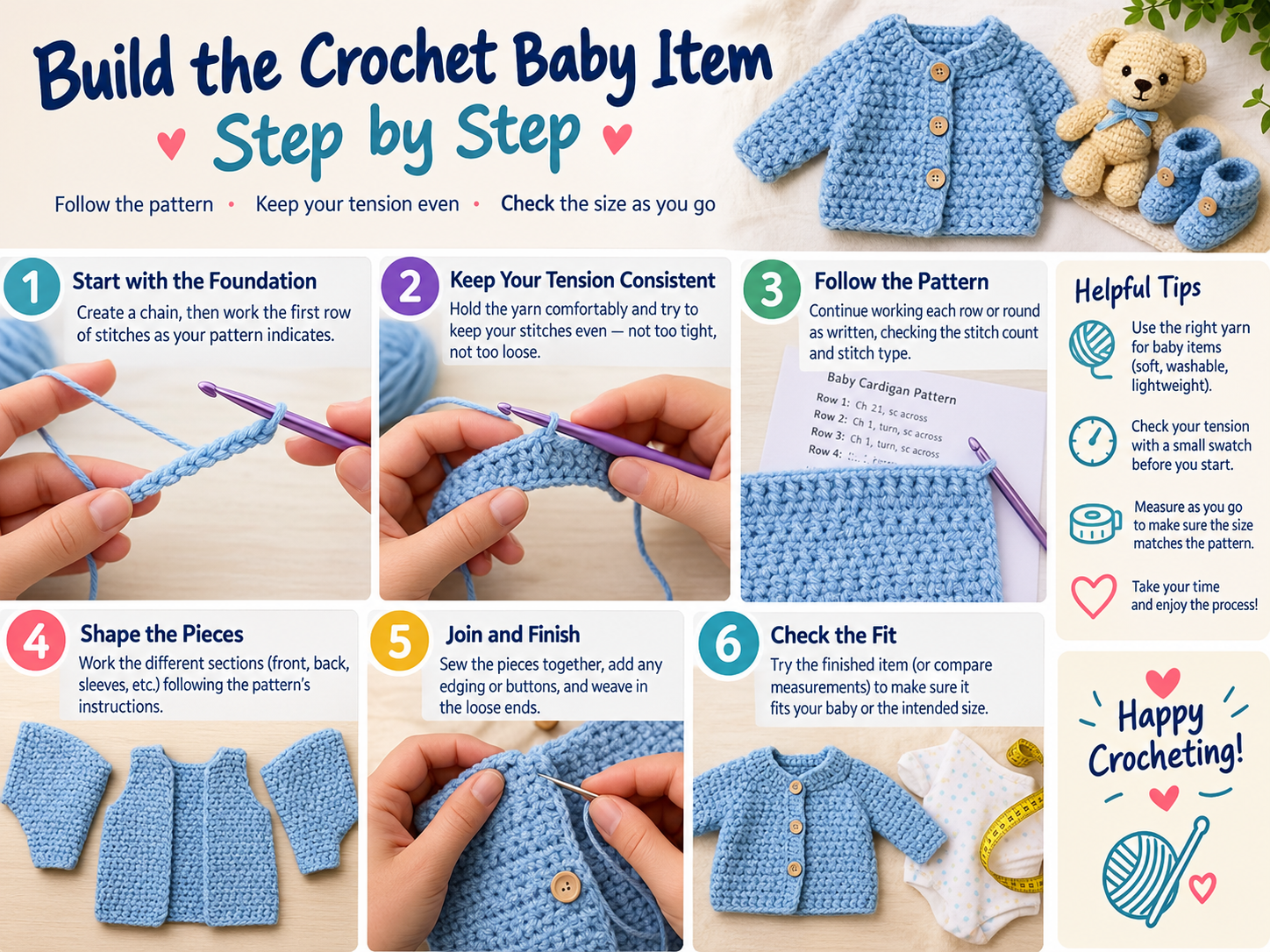
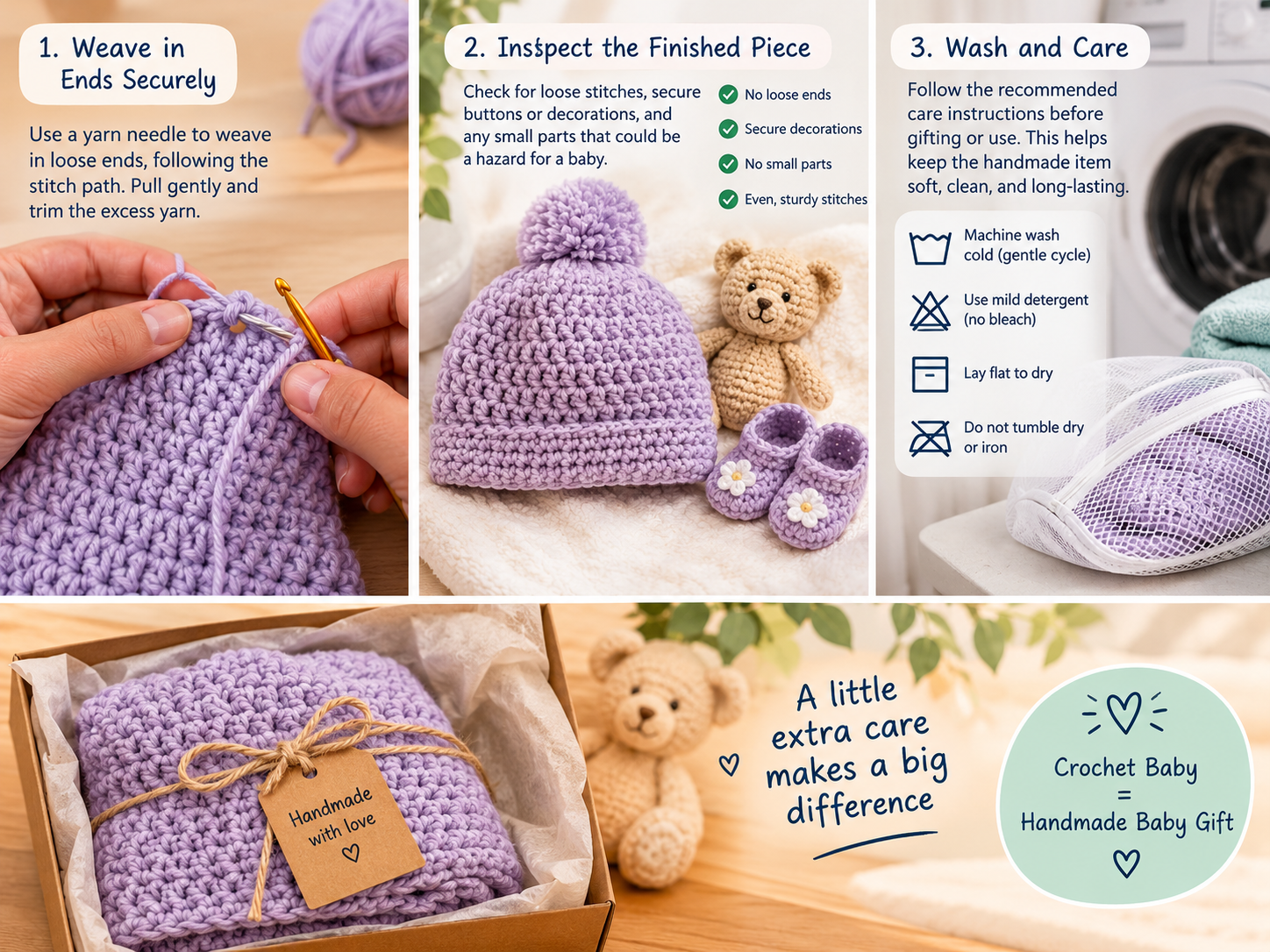
Securely weave in ends, inspect seams and motif joins, and avoid loose fringe, long loops, ribbons, buttons, beads, pom poms, or other detachable decorations. These details can snag, wrap around a limb, or come loose. There is no official crochet specific standard that certifies a blanket by stitch pattern, yarn, hook size, or hole dimension.
What testing can tell you and common claims
Small parts, pull or tension, flammability, cord and loop, chemical, laundering, and durability checks may be relevant to textile or children’s products. Requirements depend on the product and jurisdiction. A test may reveal a weak seam or detachable decoration, but passing a general product check does not override safe sleep advice against loose bedding.
Official sources do not establish a crochet specific injury rate, maximum safe opening dimension, or stitch pattern that is proven safe or unsafe. A finger or toe catching in an opening is mechanically plausible, especially if the fabric stretches, but its frequency is not quantified in the reviewed guidance. The lack of a measured rate is not proof that the event cannot happen.
| Claim | What the evidence supports | Practical response |
|---|---|---|
| Handmade or natural fiber means safe | Handmade construction and fiber type do not change the loose bedding guidance. | Keep loose blankets out of infant sleep spaces. |
| A dense stitch or small hook guarantees safety | No official opening limit or certified stitch pattern was identified. | Inspect the washed fabric and use only under continuous awake supervision. |
| Anecdotes prove there is no risk | Personal experience does not establish hazard frequency. | Check the source, date, region, age group, and whether it concerns sleep, awake use, or travel. |
| Crochet is safer or less safe than knitting | The reviewed official advice does not create a separate crochet rule. | Judge the setting and general loose bedding advice, not craft labels. |
For pattern planning, a pattern roundup can help explain why gauge and construction details matter, although garment instructions are not a blanket safety standard. The important distinction remains official sleep recommendations versus unquantified snagging concerns and personal opinions.
How to identify or recreate a blanket
To reproduce a design, collect the stitch pattern or chart, yarn brand and fiber, yarn weight and color, hook size, gauge, finished dimensions, row repeats, border, joining method, and finishing instructions. A photo may not reveal the exact stitches: similar textures can come from shells, clusters, chain spaces, or different stitch heights and tension.
Ask for close photographs of both sides, the edge, corners, and a clear section of rows. A sample swatch can help compare texture and gauge. One documented example is a 33 by 33 inch blanket, about 84 by 84 centimeters, made with DK yarn and a US G 6, 4 millimeter hook. Treat those details as an example only; they do not identify the specifications of a blanket in another photograph. For planning mistakes and pattern details, see this pattern roundup and browse ideas for matching yarn to a project.
Estimate materials and cost without guessing
Yarn is usually the largest cost. A small blanket may use several hundred grams, while a larger or denser design can require more than 1,000 grams. The actual amount depends on dimensions, stitch density, yarn weight, gauge, and fiber. A hook, tapestry needle, and scissors are basic tools; stitch markers and blocking supplies are optional.
Do not publish a precise budget until you know the blanket size, yarn quantity, local price, and currency. To estimate, swatch the chosen yarn and stitch, measure the sample, calculate the area needed, and use the yarn label’s length and weight to estimate skeins. For a closer look at fiber, labels, and cost, consult the what is yarn guide.
Conclusion
Openwork crochet can be lovely, but no stitch, fiber, hook, or handmade finish makes a loose blanket appropriate for infant sleep. Use current safe sleep guidance, distinguish sleep from closely supervised awake use, and inspect the washed fabric for openings, snags, loose ends, and damage. If you are recreating a design, first confirm its gauge, yarn, dimensions, and construction rather than guessing from a photo.
Before using a Crochet baby blanket, check the setting and examine the fabric. Keep it out of the infant sleep space, and ask your child’s healthcare professional if you are unsure about an individual situation.
Frequently asked questions
Can a crochet baby blanket go in a crib?
No. Keep loose blankets, including crochet blankets, out of an infant’s sleep space. Use a firm, flat surface with a fitted sheet and appropriately fitted sleepwear or a correctly sized, non weighted sleep sack.
Can a baby’s fingers or toes get caught in crochet?
An opening can plausibly stretch around a digit and catch it, but reviewed official sources do not provide a crochet specific injury rate or validated safe opening size. Inspect the fabric and remove it if a digit enters an opening.
Is a dense stitch safer than an open stitch?
Dense stitches tend to create fewer and smaller openings, but there is no recognized crochet specific standard that identifies a safe stitch. Stitch density does not make loose bedding suitable for infant sleep.
Can I use the blanket during awake time?
A caregiver may use it during a supervised awake activity, keeping it below the chest and away from the face, neck, fingers, toes, and mouth. Remove it when supervision ends or the baby becomes sleepy.
Does rolling over mean a baby can sleep with a blanket?
No crochet specific transition point is established. AAP guidance addresses loose bedding throughout the first year, approximately 12 months. Follow current local safe sleep advice rather than using rolling over as a reason to add a loose blanket.
{"@context":"https://schema.org","@type":"FAQPage","mainEntity":[{"@type":"Question","name":"Can a crochet baby blanket go in a crib?","acceptedAnswer":{"@type":"Answer","text":"No. Keep loose blankets, including crochet blankets, out of an infant’s sleep space. Use a firm, flat surface with a fitted sheet and appropriately fitted sleepwear or a correctly sized, non weighted sleep sack."}},{"@type":"Question","name":"Can a baby’s fingers or toes get caught in crochet?","acceptedAnswer":{"@type":"Answer","text":"An opening can plausibly stretch around a digit and catch it, but reviewed official sources do not provide a crochet specific injury rate or validated safe opening size. Inspect the fabric and remove it if a digit enters an opening."}},{"@type":"Question","name":"Is a dense stitch safer than an open stitch?","acceptedAnswer":{"@type":"Answer","text":"Dense stitches tend to create fewer and smaller openings, but there is no recognized crochet specific standard that identifies a safe stitch. Stitch density does not make loose bedding suitable for infant sleep."}},{"@type":"Question","name":"Can I use the blanket during awake time?","acceptedAnswer":{"@type":"Answer","text":"A caregiver may use it during a supervised awake activity, keeping it below the chest and away from the face, neck, fingers, toes, and mouth. Remove it when supervision ends or the baby becomes sleepy."}},{"@type":"Question","name":"Does rolling over mean a baby can sleep with a blanket?","acceptedAnswer":{"@type":"Answer","text":"No crochet specific transition point is established. AAP guidance addresses loose bedding throughout the first year, approximately 12 months. Follow current local safe sleep advice rather than using rolling over as a reason to add a loose blanket."}}]}
Leave a Reply