






Yarn is the foundation of every knitting, crochet, weaving, and fiber project, yet most guides stop at softness and color. This article explains what yarn is from raw fiber to finished skein, then walks you through comparing labels, costs, performance, common problems, and yarn substitutions using metrics that matter—not just weight category names or skein prices alone.
Key Takeaways
- Yarn is a continuous assembly of fibers or filaments; fiber percentages listed on labels indicate mass composition and influence abrasion resistance, elasticity, and care requirements.
- Ply count does not equal thickness; a loosely plied four-ply yarn can be thinner than a tightly spun two-ply yarn, so compare meters per 100 grams, WPI, and construction alongside category labels.
- Test fabric behavior, not just yarn feel; make a washed gauge swatch to measure shrinkage, growth, pilling, and recovery before committing to a large project.
- What Is Yarn?
- How Yarn Is Manufactured
- Natural, Synthetic, and Blended Yarn Fibers Compared
- How Ply, Twist, and Construction Change Yarn Performance
- Yarn Weight Is Thickness, Not Skein Weight
- How to Read a Yarn Label
- WPI, Gauge, Yardage, and Dye Lots Explained
- How Yarn Behaves in Knitting, Crochet, Weaving, and Other Crafts
- The Best Yarn for Popular Patterns and Project Ideas
- Project-by-Project Yarn Recommendations
- What Yarn Costs in 2025–2026
- Why Some Yarn Costs More Than Others
- Global Yarn Market Size and Demand in 2025–2026
- Where Yarn Is Produced and Why Market Figures Differ
- Common Yarn Problems and Negative Reviews
- How to Avoid Color Bleeding, Shrinkage, and Dye-Lot Lines
- How to Substitute Yarn Without Ruining a Pattern
- Test the Fabric, Not Just the Yarn
- Is Natural Yarn Always More Sustainable?
- A Quick Yarn-Buying Checklist
- Frequently Asked Questions About Yarn
What Is Yarn?
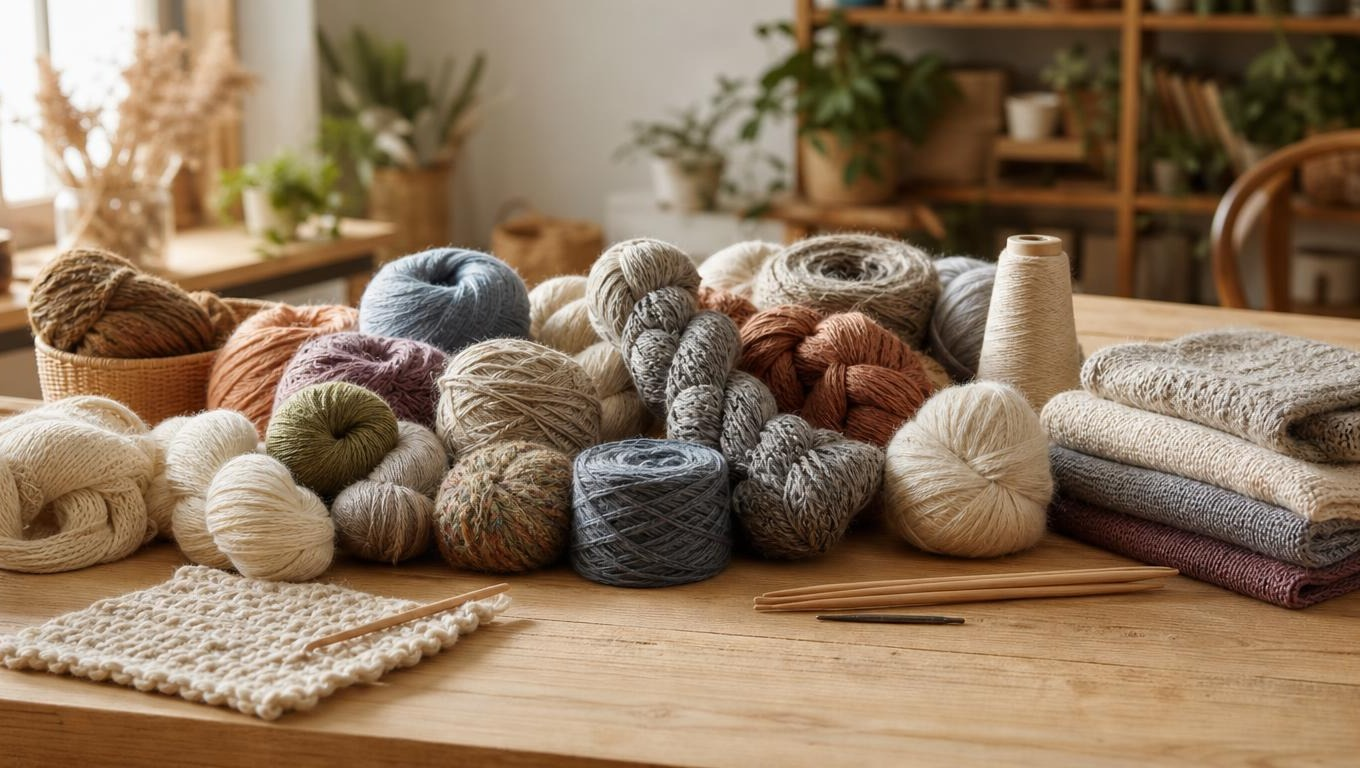
Yarn is a continuous assembly of textile fibers or filaments used to form fabric through knitting, crochet, weaving, embroidery, or related processes. It is not the same as raw fiber, sewing thread, or finished fabric. Yarn may be made from natural staple fibers such as wool, cotton, linen, alpaca, cashmere, or silk spun from short fibers; manufactured fibers such as acrylic, polyester, nylon, rayon, or bamboo-derived rayon; continuous filaments including silk, nylon, and polyester; or blends combining two or more fiber types.
A blend labeled 75% wool and 25% nylon lists composition by mass. The nylon commonly adds abrasion resistance, making this combination popular for socks. An 80% cotton and 20% acrylic blend generally offers more structure and easier care than pure cotton while retaining some cotton breathability.
How Yarn Is Manufactured
The typical yarn manufacturing process has six broad stages: fiber preparation, carding or combing, drawing, spinning, plying, and finishing. Natural fibers are cleaned, opened, sorted, and sometimes chemically treated. Cotton may be ginned and carded; wool may be scoured and de-haired. Synthetic polymers are melted or dissolved and extruded through spinnerets.
Carding disentangles fibers and forms a loose web or sliver. Combing removes shorter fibers and aligns longer fibers, producing smoother, stronger yarn. During drawing, several slivers are combined and attenuated to improve fiber alignment and evenness. The fiber strand is then drafted and twisted during spinning. Common systems include ring spinning, open-end or rotor spinning, air-jet spinning, and compact spinning.
Two or more single yarns may be twisted together during plying. Plying balances the yarn, increases strength, and changes its visual and handling characteristics. Finishing processes may include washing, mercerizing, singeing, brushing, steaming, dyeing, coating, or texturing. Yarn is then wound into balls, cakes, cones, hanks, or skeins.
Natural, Synthetic, and Blended Yarn Fibers Compared
Fiber content determines warmth, breathability, elasticity, moisture handling, durability, care, drape, and common limitations. No fiber is universally best; suitability depends on the intended fabric and project.
Wool is warm, elastic, resilient, and insulating. It is relatively forgiving of uneven tension but can felt, shrink, cause itch in some people, and sustain moth damage. Merino wool is finer and softer than ordinary wool, regulates temperature, and absorbs moisture, though it can pill and is usually more expensive. Cotton is cool, absorbent, has low elasticity, and is strong when wet, but can stretch, sag, crease, and feel heavy. Linen is very durable, breathable, and cool, improving with washing, but is initially stiff, has limited elasticity, and can split.
Alpaca is warm, lightweight, soft, drapey, and has low lanolin content, but offers lower elasticity than wool, may stretch, and can pill. Silk is strong, smooth, lustrous, and has excellent drape but is expensive, can stretch or snag, and is less insulating than wool. Acrylic is affordable, lightweight, colorfast, easy-care, and widely available, yet has lower breathability and may pill, melt, or retain odors. Nylon is strong, abrasion-resistant, and elastic but less breathable with a synthetic feel. Polyester is strong, dimensionally stable, and quick-drying but can retain odor and have limited breathability. Rayon or viscose is soft, smooth, absorbent, and drapey but can weaken when wet and stretch significantly.
A typical sock blend contains 75% wool and 25% nylon, while an 80% cotton and 20% acrylic blend generally offers more structure and easier care than pure cotton. When selecting a crochet sweater pattern, understanding fiber behavior helps prevent disappointing fabric growth or shrinkage.
How Ply, Twist, and Construction Change Yarn Performance
Ply indicates how many single strands are twisted together. It is not a complete measure of yarn thickness. A loosely plied four-ply yarn can be thinner than a tightly spun two-ply yarn, so ply count must be evaluated alongside diameter, twist, fiber, and yardage per unit of weight.
Single-ply yarn is soft, lofty, and often visually clear but may bias, pill, or split more easily. Two-ply yarn can produce a round or balanced yarn suitable for lace and lightweight garments. Three-ply yarn is often round, stable, and durable. Four-ply and higher yarn is commonly stronger, more balanced, and more stitch-definition-oriented. Chainette or tube yarn is lightweight and often soft but may snag or collapse under heavy abrasion. Cabled yarn has plies combined in multiple stages, producing high roundness, strength, and stitch definition.
Twist holds fibers together and controls the yarn’s strength, elasticity, surface, and tendency to split. Low twist produces soft, lofty, fuzzy, and warm yarn but may pill or separate during stitching. High twist creates firm, smooth, durable yarn resistant to abrasion but may feel less soft. Balanced twist tends to produce predictable stitch formation and reduced bias. S-twist and Z-twist direction can interact with knitting or crochet mechanics. Some single-ply yarns may bias or behave differently depending on stitch direction.
Yarn Weight Is Thickness, Not Skein Weight
In craft terminology, yarn weight refers primarily to thickness, not mass. The commonly used craft classification contains eight categories: 0 Lace, 1 Super Fine, 2 Fine, 3 Light, 4 Medium, 5 Bulky, 6 Super Bulky, and 7 Jumbo. Thicker yarn generally produces faster knitting and crochet, heavier and warmer fabric, lower stitch counts per unit area, and more visible texture and bulk. Thinner yarn generally produces more drape and detail, greater yardage requirements, longer project times, and better suitability for lace, socks, lightweight garments, and fine amigurumi.
Category boundaries vary among manufacturers, so gauge and actual dimensions remain more reliable than the category number alone. A yarn’s meters or yards per 100 grams, diameter, and recommended gauge provide more useful information for project planning.
How to Read a Yarn Label
Yarn labels decode fiber percentages, net weight, yardage or meterage, recommended needle and hook sizes, gauge, color number, dye lot, country of origin, care instructions, and treatment claims such as superwash, recycled, or organic. Label recommendations are starting points rather than guarantees.
Fiber content is normally listed by percentage, such as 100% wool, 80% cotton and 20% acrylic, 70% alpaca and 30% silk, or 75% wool and 25% nylon. For blended yarns, the percentages indicate mass composition, not necessarily the percentage of visible surface, warmth, softness, or durability. Gauge is usually stated as the number of stitches and rows in 10 cm or 4 inches, but it can change with the tool size, stitch pattern, tension, fiber elasticity, washing, and blocking.
Recommended needle and hook size, skein weight, yardage or meterage, lot or batch number, color name and number, country of origin, manufacturer or importer, whether the yarn is superwash-treated, whether the fiber is recycled, organic, certified, or mulesing-free where relevant, and lightfastness or washfastness claims for specialist applications should all be checked before purchase.
WPI, Gauge, Yardage, and Dye Lots Explained
Wraps per inch (WPI) estimates yarn thickness by winding yarn around a ruler without compressing it. More wraps per inch indicate thinner yarn; fewer wraps per inch indicate thicker yarn. WPI is especially useful for unlabeled or handspun yarn but is affected by loft, compression, twist, and how tightly the yarn is wrapped. WPI should not replace a gauge swatch because two yarns with similar WPI can behave differently.
Two 100-gram skeins can contain substantially different lengths because a fine or lofty yarn may provide far more meterage than a dense cotton or bulky yarn of the same mass. A lofty alpaca yarn may contain more meters than a dense cotton yarn of the same mass. A lace yarn may contain hundreds of meters per 50 grams. A bulky yarn may contain fewer than 100 meters per 100 grams. Project planning should compare length per unit mass, not skein count alone.
A dye lot identifies yarn dyed in the same production batch. Skeins from different lots can vary in hue, saturation, and depth. Buyers making a large project should purchase enough yarn from one dye lot. Alternating skeins every few rows can reduce visible transition lines when dye lots cannot be matched. Hand-dyed yarn may intentionally have significant variation even within one lot.
How Yarn Behaves in Knitting, Crochet, Weaving, and Other Crafts
Knitting is highly sensitive to yarn elasticity, twist, and surface friction. Wool and wool blends generally produce good stitch recovery. Cotton and linen create stable but less elastic garments. Smooth, round yarns reveal cables and colorwork clearly. Fuzzy yarns soften color transitions and conceal stitch errors. High-twist yarns typically resist abrasion and improve stitch definition. Single-ply yarns may create bias or uneven fabric, particularly in stockinette stitch.
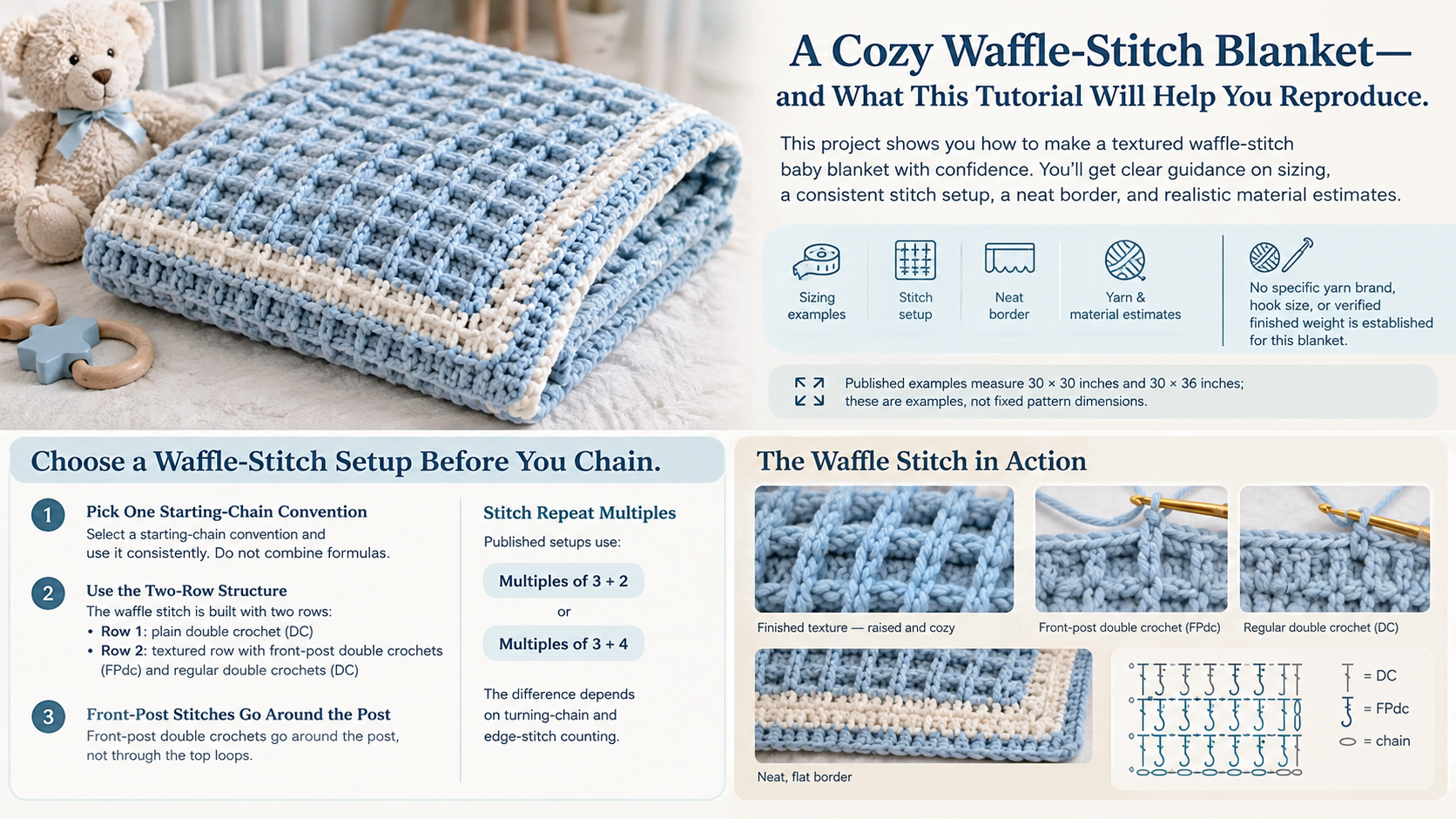
Crochet uses more yarn per square inch than knitting and applies greater friction to the yarn. Smooth cotton and acrylic are common for amigurumi because they produce firm fabric and clear stitches. Splitty yarns can be frustrating with crochet hooks, especially when repeatedly entering tight stitches. Wool is useful for textured crochet because its elasticity helps maintain shape. Cotton gives structure to baskets, bags, potholders, and home décor but may produce a heavier fabric.
Weaving distinguishes between warp and weft requirements. Warp yarn must tolerate sustained tension and abrasion, while fuzzy, slubby, bouclé, and novelty yarns are generally safer as weft because they may shed or catch in heddles and reeds. Wool, cotton, linen, and strong synthetics can serve as warp materials depending on the loom and sett. Yarn diameter and sett must be compatible; a yarn that is too thick or fragile can produce broken warp ends or distorted cloth.
Smooth, tightly twisted yarns are easier to separate and control in embroidery. Cotton and linen provide predictable surface coverage. Strong, low-stretch cords are preferred for macramé. Decorative novelty yarns work for surface embellishment but may be difficult to pull through dense fabric.
The Best Yarn for Popular Patterns and Project Ideas
Wool and nylon blends are widely used for socks because wool supports moisture management and elastic recovery while nylon improves abrasion resistance. Sweaters typically require elastic wool or balanced blends; account for growth with cotton, alpaca, silk, and rayon. Blankets benefit from washable acrylic, wool, cotton-acrylic, or washable wool. Scarves favor wool, alpaca, silk blends, acrylic, or cotton for softness, drape, warmth, and surface comfort.
Baby items require soft merino, washable wool, cotton, cotton-acrylic, or selected acrylic with softness, washability, low shedding, and colorfastness. Avoid scratchy fibers, loose novelty textures, and unsecured decorative elements. Amigurumi benefits from smooth cotton, mercerized cotton, cotton blends, or firm acrylic because their smooth surfaces produce visible stitches and firm fabric. Cotton and acrylic are common amigurumi choices because their smooth surfaces produce visible stitches and firm fabric, whereas fuzzy yarn can hide stitches and expose gaps around stuffing.
Hats and mittens work well with wool, merino, wool-acrylic, or wool-nylon for warmth, elasticity, and shape recovery. Cotton may produce poor fit retention. Dishcloths and washcloths require cotton or linen-cotton for absorbency, durability, and washability. Acrylic is generally unsuitable for heat and absorbency requirements. Bags and baskets need cotton, linen, cord, or sturdy acrylic blends for low stretch, abrasion resistance, and body. Soft alpaca and loosely spun wool may deform. Rugs and mats require strong cotton, wool, polypropylene, or rug yarn for abrasion resistance, stable dimensions, and cleanability. Delicate silk and low-twist yarns wear rapidly. Lace shawls favor silk, merino, alpaca-silk, or fine wool for smoothness, blocking response, drape, and stitch visibility. Very fuzzy fibers can obscure lace motifs. Home décor projects benefit from cotton cord, jute, linen, sturdy acrylic, or wool felted yarn for shape retention, durability, colorfastness, and cleanability.
Project-by-Project Yarn Recommendations
Sweaters work best with elastic wool or balanced blends; account for growth with cotton, alpaca, silk, and rayon. Alpaca and silk blends create drape but may require design allowances for growth. Socks require high-twist wool with nylon or polyamide. Wool-nylon blends are widely favored because wool manages moisture and nylon improves abrasion resistance. Blankets benefit from washable acrylic, wool, cotton-acrylic, or washable wool. Acrylic is frequently selected for low cost and machine washability, while wool provides warmth and resilience but needs more careful care. Heavy cotton blankets can become very heavy; fuzzy yarn obscures joins.
Baby items require smooth, colorfast, low-shedding, washable yarn. Cotton and washable fine wool are common where softness and laundering are important. Smooth yarns reduce snagging and make inspection easier. Amigurumi benefits from firm cotton, mercerized cotton, cotton blends, or smooth acrylic. Firm, smooth yarns and tight gauge are preferred because they produce a stable fabric that holds stuffing. Wool and fuzzy yarn can obscure stitches and create loose stuffing gaps.
Home décor projects require cotton cord, linen, jute, sturdy acrylic, or rug wool. Cotton, linen, jute, and sturdy synthetics generally outperform delicate luxury fibers when abrasion, moisture, or frequent cleaning is expected. Lace shawls work well with fine wool, silk, or alpaca-silk blends with suitable stitch visibility.
What Yarn Costs in 2025–2026
Retail prices vary by country, brand, fiber grade, skein size, dyeing method, certification, and sales channel. Broad retail indications are USD 1–4 per 100 g for acrylic, USD 2–15 for cotton, USD 5–25+ for standard wool, approximately USD 10–20 for merino, USD 15–25+ for alpaca, and often USD 15–40+ for silk. Wool blends typically range from approximately USD 5–20 per 100 grams, while alpaca-silk or luxury blends frequently cost USD 20–50+ per 100 g equivalent and are often sold in 25–50 g skeins.
Acrylic prices are driven by polymer cost, brand, softness treatment, and novelty construction. Cotton prices reflect organic certification, mercerization, long-staple quality, and color treatment. Standard wool prices depend on breed, micron, processing, origin, and superwash treatment. Merino wool prices are influenced by fiber fineness, origin, processing, and ethical certification. Alpaca prices reflect baby alpaca content, rarity, softness, blend, and processing. Silk prices are driven by silk grade, filament length, purity, hand dyeing, and blend. Wool blends vary by nylon, alpaca, silk, acrylic, and percentage composition. Alpaca-silk or luxury blends carry high-value fibers, low skein weight, hand dyeing, and limited production.
Why Some Yarn Costs More Than Others
Price differences arise from raw-fiber scarcity, fiber fineness, staple or filament length, sorting and processing, mercerization, superwash treatments, blending, hand dyeing, certifications, small-batch labor, imports, and retail distribution. Alpaca, silk, cashmere, and fine merino are more expensive than commodity acrylic. Finer fibers generally require more careful processing and command higher prices. Longer, smoother fibers can produce stronger and more lustrous yarn.
Combing, mercerizing, superwash treatment, brushing, and blending increase cost. Hand dyeing, small-batch colorways, gradients, and complex overdyes raise prices. Factory-produced yarn benefits from volume; small-batch yarn has higher labor and overhead costs. Organic, recycled, animal-welfare, and environmental certifications can add cost. Premium alpaca-silk yarn may be sold as 70% baby alpaca and 30% silk with approximately 420 yards per 50 grams, illustrating why both weight and yardage must be normalized before comparing value. Luxury yarn is often sold in 25- or 50-gram skeins, making the per-skein price appear lower or higher than direct comparisons suggest. Import duties, shipping, specialty retail, and limited availability affect final prices. A low skein price can be misleading if the skein contains only 25 or 50 grams.
Global Yarn Market Size and Demand in 2025–2026
Published 2025 estimates range from USD 8.7 billion for knitting yarn to USD 102.57 billion for yarn, fiber, and thread manufacturing. Mordor Intelligence estimates the broader yarn market at USD 37.92 billion in 2025 and USD 38.13 billion in 2026, while Research and Markets estimates USD 67.75 billion and USD 70.65 billion, respectively. Sources report different totals because they apply different definitions, geographies, currencies, channels, and inclusions.
Market reports vary substantially because some measure handicraft yarn, while others include industrial textile yarn, fibers, and thread manufacturing. The figures are therefore not directly interchangeable. Reported 2025–2026 market trends include continued growth in textile and apparel manufacturing, increased e-commerce distribution, demand for sustainable and recycled fibers, expansion of home-textile applications, continued strength of synthetic yarns due to price and performance, and growth in craft and knitting-yarn categories, although these are much smaller than the total industrial yarn market.
Where Yarn Is Produced and Why Market Figures Differ
Asia-Pacific is consistently identified as the dominant production and consumption region. Available reports assign Asia-Pacific between 52.1% and 63.5% of the overall 2025 yarn market, while one cotton-yarn estimate places the region at 81.2% of revenue. China, India, Bangladesh, and Vietnam are identified as major production centers.
No single harmonized 2025–2026 production total in metric tonnes is available because datasets separate spun and filament yarn, fiber types, industrial and craft products, and sales from physical production. International statistics often report fiber production rather than finished yarn, spun yarn separately from filament yarn, cotton, wool, and synthetic yarn in separate datasets, industrial textile yarn separately from handcraft yarn, and shipments, exports, or sales rather than physical production. Revenue figures should not be converted into production tonnage without product-specific price and fiber-mix assumptions.
Common Yarn Problems and Negative Reviews
Splitting occurs when a hook or needle enters between plies or separates the component strands. Common causes include low-twist or loosely plied construction, multiple fine plies, slippery fibers such as silk or rayon, tight crochet or small needles, blunt or damaged tools, and high friction during repeated undoing. Most affected projects include crochet, lace, amigurumi, and detailed colorwork.
Pilling is the formation of small fiber balls caused by abrasion and loose surface fibers. Low-twist and loosely plied yarn is more likely to split or pill, while high-twist wool or wool-nylon yarn generally withstands abrasion better. Risk increases with soft, low-twist yarn, short staple fibers, alpaca, cashmere, and some merino yarns, friction at underarms, cuffs, bags, and furniture contact points, and blends combining fibers with different strengths.
Factory yarn may contain knots or joined sections. Hand-dyed and small-batch yarn can also contain joins resulting from spinning or winding. Negative reviews commonly concern more joins than expected, knots that become visible in colorwork, weak joins, knots placed close together, inconsistent winding, and skeins that collapse or tangle during use.
Color bleeding occurs when unattached dye migrates during washing. Higher risks include deep reds, blues, purples, and black, hand-dyed yarn, poorly fixed dyes, warm water, alkaline detergent, and prolonged soaking, and contrasting colors used together. Bleeding is particularly problematic in stranded colorwork, blankets, and multicolor garments.
Inconsistent thickness may arise from slub or novelty construction, hand spinning or hand dyeing, inconsistent drafting, uneven ply tension, different production batches, or intentional thick-and-thin design. It can produce irregular gauge, visible texture changes, and difficulty meeting a pattern’s measurements.
Two skeins with the same color name can differ because of dye-batch conditions, fiber absorption, and batch timing. This is especially visible in large solid-color garments, stripes, and blankets. Animal fibers can shrink or felt when exposed to heat, agitation, sudden temperature changes, and alkaline detergents. Cotton, linen, and rayon may also shrink or change shape, although their mechanisms differ from wool felting.
Cotton, alpaca, silk, and rayon generally have less elastic recovery than wool. Garments made from these fibers may lengthen under their own weight, particularly when wet. Possible causes of skin irritation include coarse wool fibers, residual processing chemicals, lanolin sensitivity, scratchy guard hairs, dyes or finishing agents, and friction from fuzzy or stiff fibers.
Other recurring complaints include excessive shedding, chemical or oily odor, inaccurate yardage, difficulty winding hanks, color not matching online photographs, excessive fuzz obscuring stitch definition, yarn breaking under tension, inadequate elasticity for socks or fitted garments, machine-wash labels that do not reflect post-wash shape retention, and discontinued colors or inconsistent restocking.
How to Avoid Color Bleeding, Shrinkage, and Dye-Lot Lines
Test a swatch for colorfastness and dimensional change before starting a large or multicolor project. Deep reds, blues, purples, and blacks may release excess dye. Wool felting is promoted by heat, agitation, sudden temperature changes, and alkaline detergent; dye migration is more likely with dark or saturated shades and prolonged warm-water soaking.
Buy enough yarn from one lot and alternate skeins when lots or hand-dyed shades vary. Alternating skeins every few rows can reduce visible transition lines when dye lots cannot be matched. Hand-dyed yarn may intentionally have significant variation even within one lot. A yarn label’s gauge is a starting point, not a guarantee. A swatch should be washed and dried in the intended manner because wool, cotton, alpaca, and rayon may change dimensions after finishing.
How to Substitute Yarn Without Ruining a Pattern
Compare fiber behavior, meters per 100 grams, WPI, construction, twist, elasticity, intended care, washed gauge, and fabric density—not merely the printed yarn-weight category. Yarn-weight names are not universal physical measurements, and two yarns with similar WPI can still produce different fabric because of loft, compression, twist, and fiber elasticity.
Make this a central, step-by-step process. Compare fiber behavior first. If the original yarn is 100% wool and the substitute is 100% cotton, expect lower elasticity and potential sagging. Compare meters per 100 grams. If the original yarn provides 200 meters per 100 grams and the substitute provides only 150 meters per 100 grams, calculate total yardage required and adjust skein count accordingly.
Compare WPI. Wrap both yarns around a ruler without compressing them. Count wraps per inch. Similar WPI suggests similar thickness, but loft and compression mean WPI alone is not sufficient. Compare construction, twist, and elasticity. A high-twist three-ply yarn will behave differently from a low-twist single-ply yarn even if both are labeled “worsted.” Compare intended care. If the original yarn requires hand washing and the substitute is superwash, the finished fabric may behave differently after repeated laundering.
Make a washed gauge swatch. Knit or crochet a swatch at least 15 cm square, record pre-wash dimensions, wash it as the finished project will be washed, dry it appropriately, and measure shrinkage, growth, recovery, pilling, bleeding, and surface change. Calculate how many replacement skeins are required from total yardage. Divide total project yardage by substitute skein yardage, then round up to ensure enough yarn.
Test the Fabric, Not Just the Yarn
Make a sufficiently large swatch, record pre-wash dimensions, wash it as the finished project will be washed, dry it appropriately, and measure shrinkage, growth, recovery, pilling, bleeding, and surface change. Cotton, alpaca, silk, and rayon generally have less elastic recovery than wool and may lengthen under their own weight, especially when wet.
Suggest hanging a swatch for drapey sweater yarns to test growth under load. A swatch that grows 10% in length when hung wet may produce a sweater that sags over time. A swatch that pills heavily after three wash cycles may produce a garment that looks worn after a few months. A swatch that bleeds color into white fabric may ruin a multicolor blanket.
Is Natural Yarn Always More Sustainable?
Natural does not automatically mean lower environmental impact. Compare water and energy use, dyeing, microfiber shedding, animal welfare, recycled content, durability, transport, packaging, recyclability, and cost per wear. Current market reporting identifies sustainable and recycled fibers as a demand trend, but “natural” does not automatically mean lower environmental impact; lifecycle, care, and usable lifespan also matter.
A durable synthetic garment may have a different lifecycle profile from a short-lived natural-fiber garment. Wool production requires land, water, and feed; acrylic production requires petroleum and energy. Wool is biodegradable; acrylic sheds microfibers. Wool can be recycled into new yarn or felt; acrylic is harder to recycle. Wool may require dry cleaning or careful washing; acrylic can be machine washed and dried. A wool sweater worn for ten years may have lower impact per wear than an acrylic sweater replaced annually.
Evaluate certified and traceable claims individually. Organic certification addresses pesticide and chemical use but not water consumption or transport. Recycled content reduces virgin material demand but does not eliminate energy use. Animal-welfare certification addresses treatment during fiber production but not processing or dyeing. Carbon-neutral claims may include offsets rather than actual reduction. Transparency in supply chain, processing, dyeing, finishing, transport, packaging, durability, and end-of-life disposal all matter.
A Quick Yarn-Buying Checklist
Buyers should compare at least skein weight, total yardage, fiber composition, dye lot, gauge, recommended tool size, and care instructions before purchasing. Check project use, fiber percentages, yarn category, meters or yards per 100 grams, WPI if needed, gauge, construction, twist, dye lot, care symbols, total required yardage, skin comfort, colorfastness risk, return policy, and budget per 100 grams.
Confirm fiber percentages match project requirements. Verify skein weight and calculate total skeins needed from project yardage. Check dye lot and buy all skeins from one lot for large projects. Read care instructions and confirm they match your washing routine. Test skin comfort if you have sensitivities. Verify return policy in case the yarn does not match expectations. Compare budget per 100 grams, not just skein price.
Frequently Asked Questions About Yarn
What is yarn made from?
Yarn is made from natural staple fibers such as wool, cotton, linen, alpaca, cashmere, or silk spun from short fibers; manufactured fibers such as acrylic, polyester, nylon, rayon, or bamboo-derived rayon; continuous filaments including silk, nylon, and polyester; or blends combining two or more fiber types.
Is ply the same as yarn weight?
No. Ply indicates how many single strands are twisted together. It is not a complete measure of yarn thickness. A loosely plied four-ply yarn can be thinner than a tightly spun two-ply yarn, so ply count must be evaluated alongside diameter, twist, fiber, and yardage per unit of weight.
What yarn is easiest for beginners?
Medium-weight (category 4) acrylic or wool blend yarn in a light color is often easiest for beginners because it is affordable, forgiving, widely available, and produces visible stitches that make it easier to spot and correct mistakes.
How can yarn weight be identified without a label?
WPI can help identify an unlabeled yarn—more wraps indicate a thinner yarn—but a washed gauge swatch remains necessary because WPI does not predict finished fabric behavior by itself. Wrap the yarn around a ruler without compressing it and count wraps per inch. Compare the result to standard WPI ranges for each yarn-weight category.
Is wool warmer than acrylic?
Wool is generally warmer than acrylic because it traps more air, regulates moisture, and maintains insulation even when damp. Acrylic is lightweight and retains some warmth but has lower breathability and moisture management than wool.
What yarn is best for crochet or amigurumi?
Smooth cotton, mercerized cotton, cotton blends, or firm acrylic are best for crochet and amigurumi because their smooth surfaces produce visible stitches and firm fabric. Fuzzy yarn can hide stitches and expose gaps around stuffing.
Can different dye lots be used together?
Different dye lots can be used together, but visible color differences may appear in solid-color areas. Alternating skeins every few rows can reduce visible transition lines. Hand-dyed yarn may intentionally have significant variation even within one lot.
Understanding what yarn is, how it is manufactured, and how fiber content, ply, twist, and construction affect performance empowers you to select yarn based on actual fabric behavior rather than labels alone. Compare meters per 100 grams, test washed swatches, and verify dye lots before committing to a large project. Whether you are choosing yarn for a sweater, socks, blankets, or amigurumi, practical testing and realistic expectations will produce better results than relying on softness or category names alone.
{
"@context": "https://schema.org",
"@type": "FAQPage",
"mainEntity": [
{
"@type": "Question",
"name": "What is yarn made from?",
"acceptedAnswer": {
"@type": "Answer",
"text": "Yarn is made from natural staple fibers such as wool, cotton, linen, alpaca, cashmere, or silk spun from short fibers; manufactured fibers such as acrylic, polyester, nylon, rayon, or bamboo-derived rayon; continuous filaments including silk, nylon, and polyester; or blends combining two or more fiber types."
}
},
{
"@type": "Question",
"name": "Is ply the same as yarn weight?",
"acceptedAnswer": {
"@type": "Answer",
"text": "No. Ply indicates how many single strands are twisted together. It is not a complete measure of yarn thickness. A loosely plied four-ply yarn can be thinner than a tightly spun two-ply yarn, so ply count must be evaluated alongside diameter, twist, fiber, and yardage per unit of weight."
}
},
{
"@type": "Question",
"name": "What yarn is easiest for beginners?",
"acceptedAnswer": {
"@type": "Answer",
"text": "Medium-weight (category 4) acrylic or wool blend yarn in a light color is often easiest for beginners because it is affordable, forgiving, widely available, and produces visible stitches that make it easier to spot and correct mistakes."
}
},
{
"@type": "Question",
"name": "How can yarn weight be identified without a label?",
"acceptedAnswer": {
"@type": "Answer",
"text": "WPI can help identify an unlabeled yarn—more wraps indicate a thinner yarn—but a washed gauge swatch remains necessary because WPI does not predict finished fabric behavior by itself. Wrap the yarn around a ruler without compressing it and count wraps per inch. Compare the result to standard WPI ranges for each yarn-weight category."
}
},
{
"@type": "Question",
"name": "Is wool warmer than acrylic?",
"acceptedAnswer": {
"@type": "Answer",
"text": "Wool is generally warmer than acrylic because it traps more air, regulates moisture, and maintains insulation even when damp. Acrylic is lightweight and retains some warmth but has lower breathability and moisture management than wool."
}
},
{
"@type": "Question",
"name": "What yarn is best for crochet or amigurumi?",
"acceptedAnswer": {
"@type": "Answer",
"text": "Smooth cotton, mercerized cotton, cotton blends, or firm acrylic are best for crochet and amigurumi because their smooth surfaces produce visible stitches and firm fabric. Fuzzy yarn can hide stitches and expose gaps around stuffing."
}
},
{
"@type": "Question",
"name": "Can different dye lots be used together?",
"acceptedAnswer": {
"@type": "Answer",
"text": "Different dye lots can be used together, but visible color differences may appear in solid-color areas. Alternating skeins every few rows can reduce visible transition lines. Hand-dyed yarn may intentionally have significant variation even within one lot."
}
}
]
}
Leave a Reply